
Classic Vanilla Bundt Cake: Tall, Tender, No Frosting Needed
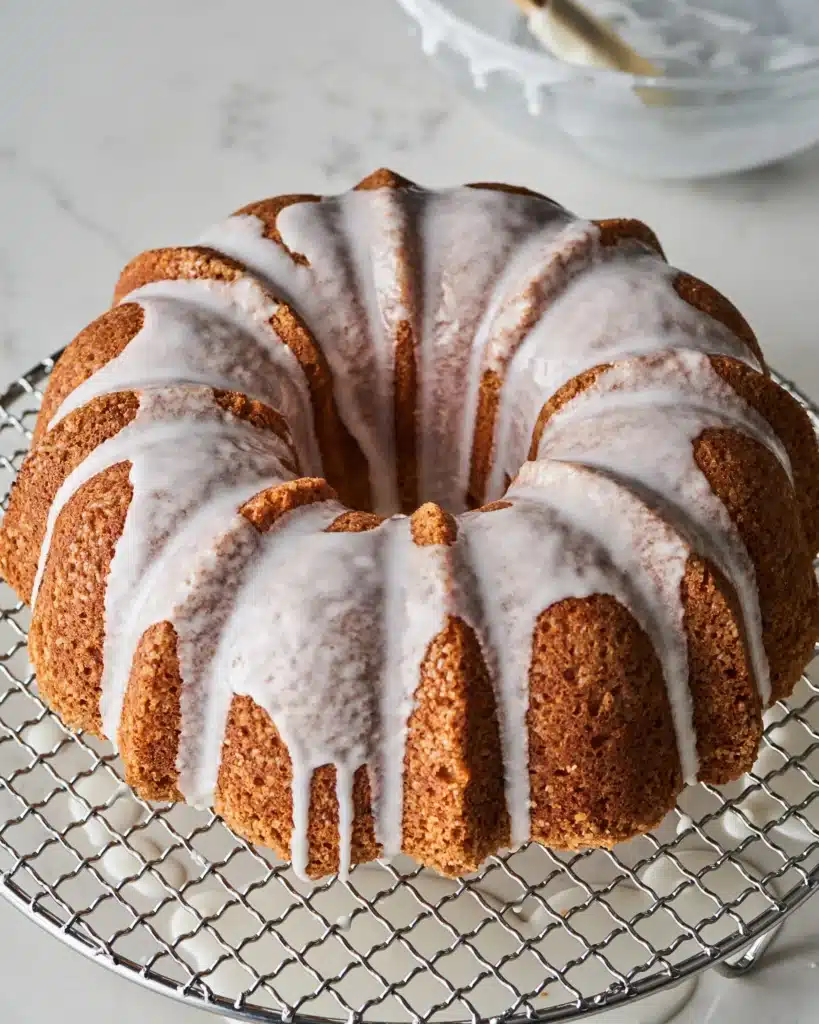
This classic vanilla bundt cake is the tall, buttery, fine-crumbed one you bake on a Tuesday and still feel proud serving on Sunday. It's a creamed butter cake, so it's lighter than a dense lemon pound cake and far simpler than a layered lemon cream cake or a frosted chocolate cake. The flavor is pure vanilla and sweet dairy under a lightly crisp golden crust. No frosting required. Nearly all of the outcome rides on two things: creaming the butter properly, and prepping the pan so the cake releases in one piece.
Why you'll love this
- Tall, tender and fine-crumbed rather than tight and heavy like a pound cake
- Nine pantry staples, no cake flour, no equipment beyond a mixer and a 10-cup bundt pan
- Good naked: a dusting of powdered sugar is enough, and a thin glaze is optional rather than structural
- Pan-prep that actually works, so you're not chiseling half a cake out of the flutes
- Straight vanilla flavor, the go-with-anything cake for when you don't want lemon or chocolate
Key ingredients & how to use them
- Unsalted butter, softened — Flavor and structure both. Aim for 65°F (18°C): it dents under a finger but never looks shiny or slumped. Greasy butter can't hold air, so the cake bakes squat.
- Granulated sugar — Its real job here is mechanical. The crystal edges cut air pockets into the butter as you cream, and powdered sugar has no grit to do that.
- Large eggs, room temperature — They bind, enrich and lift. Cold eggs shock the creamed butter and break the batter into curds, which costs you the air you just built.
- All-purpose flour — Spoon it into the cup and level it, or weigh about 312 g for 2 1/2 cups. Scooping from the bag packs in up to 20 percent extra and bakes out dry.
- Milk — Moisture and a fine, even crumb. Let it warm up so it doesn't chill the batter back down. Whole milk is softest; buttermilk works too and adds a faint tang.
- Vanilla extract — The whole personality of this cake, so use real extract or bean paste. Two teaspoons reads clearly against all that butter, while imitation turns sharp at this dose.
- Baking powder and baking soda — The powder lifts; the soda balances acidity and browns the crust a deeper gold. Measure both level, not heaped, or the cake rises fast and sinks.
- Salt — Half a teaspoon stops the sweetness going flat and makes the vanilla taste like vanilla. If you only have salted butter, cut this to 1/4 teaspoon.
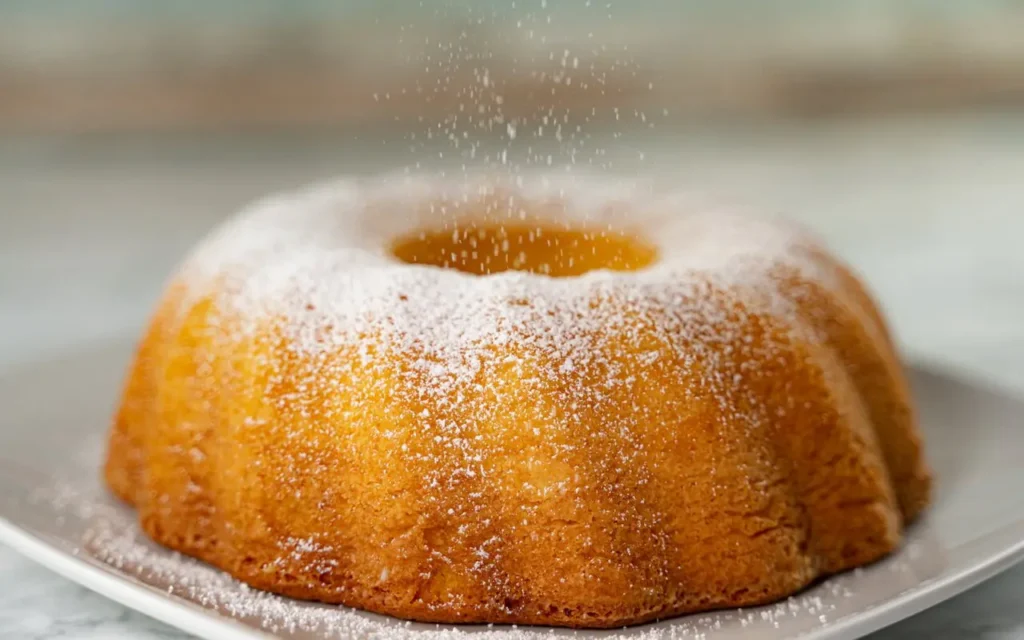
- Powdered sugar (optional) — For dusting minutes before serving, or whisked with vanilla and milk into a thin glaze. Dust it early and it melts into the crust.
How to make it (step by step)
-
 1
1Heat the oven and prep the pan properly
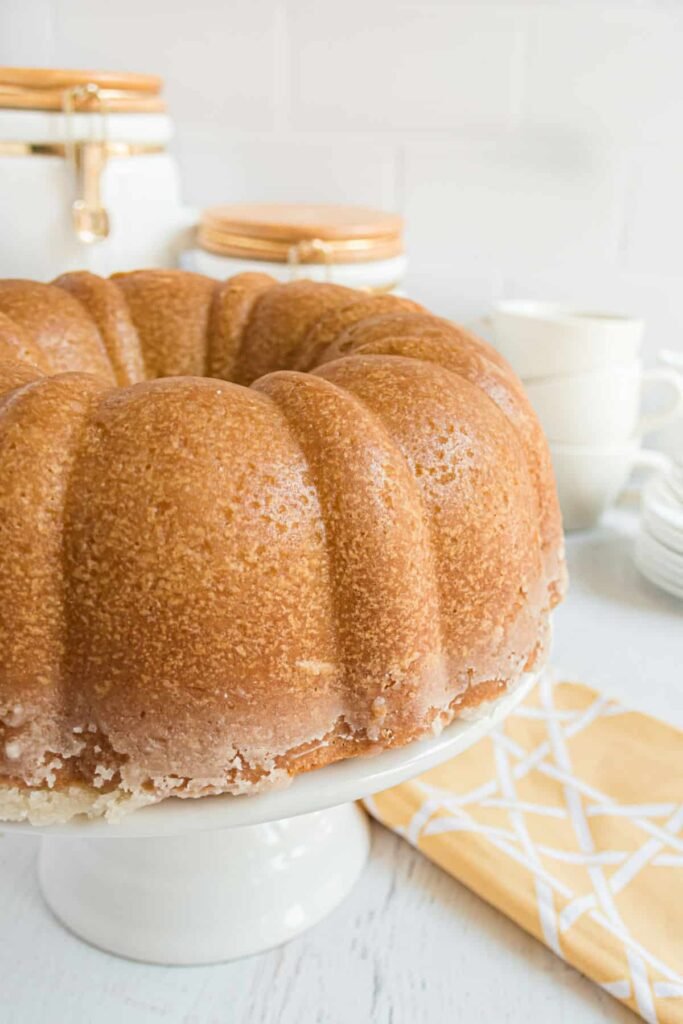
Heat the oven to 350°F (175°C), rack in the lower third. Now the pan, and don't rush it: brush soft butter or shortening into every flute, seam and inch of the center tube until the interior looks matte with no bare metal showing. Add two tablespoons of flour, tilt and tap to coat, then invert the pan over the sink and knock out the excess. Cooking spray alone pools in the grooves and bakes to a sticky varnish, which is exactly where cakes tear.
-
 2
2Cream the butter and sugar until pale
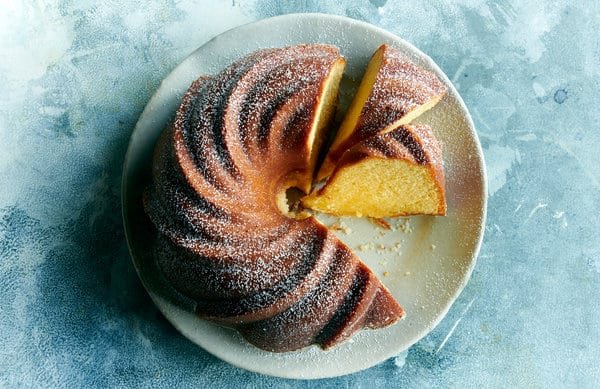
Beat the softened butter and sugar on medium-high for a full 4 to 5 minutes, or 6 to 7 with a hand mixer. Watch three cues: the color goes from butter-yellow to near-ivory, the volume grows by about a third, and the texture turns from grainy to soft and spreadable. Those sugar crystals are cutting millions of tiny air cells into the fat, and that network is this cake's entire structure. Scrape the bowl twice.
-
 3
3Beat in the eggs one at a time
Add the eggs one at a time, beating 20 to 30 seconds after each, and only add the next once the batter looks smooth again. Beat in the vanilla last. Cold eggs seize the butter and break the batter into a curdled, cottage-cheese look, which means the fat and water have separated and some trapped air has escaped. If that happens, mix another minute on medium with a tablespoon of the measured flour and it usually comes back.
-
4
Whisk the dry ingredients separately
Whisk the flour with the baking powder, baking soda and salt in a second bowl for a good 15 seconds. Whisking rather than stirring breaks up the leaveners, so you don't get bitter soda spots or a lopsided rise on one side of the ring. Have the milk measured and out on the counter before you start mixing.
-
 5
5Alternate flour and milk, starting and ending with flour
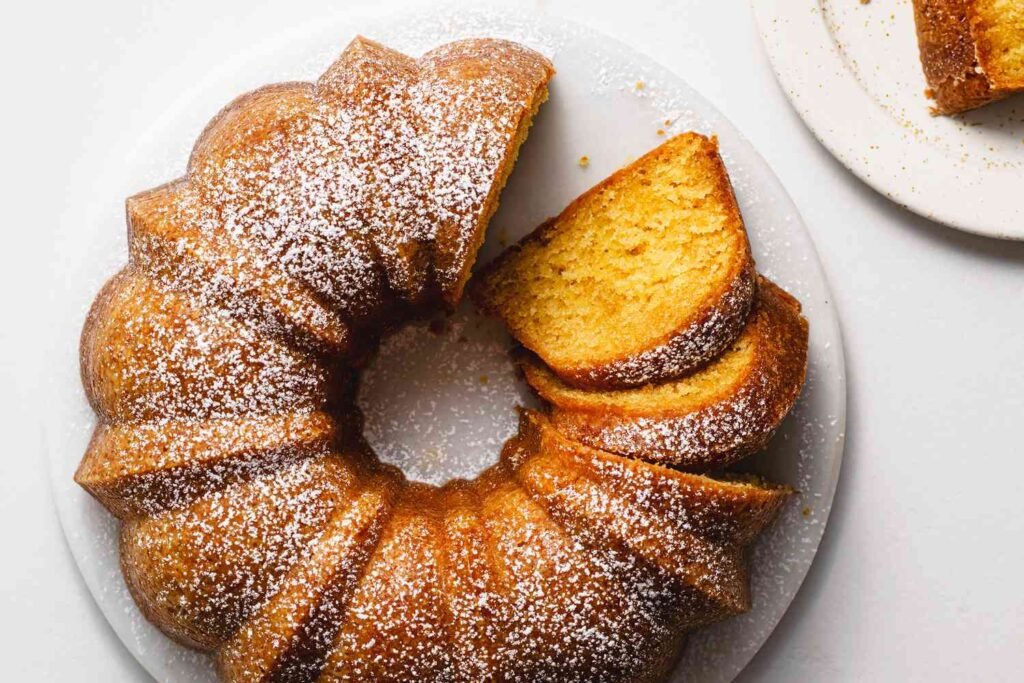
Drop the mixer to low and add the flour in three parts, alternating with the milk in two. That order keeps the batter emulsified so the liquid never splits the fat. Mix each addition only until it disappears, about 10 seconds. The moment flour meets liquid gluten starts forming, and every extra turn of the beater builds more of it, which is what makes a bundt tough and riddles it with long tunnels. Finish by hand, folding up from the bottom until the last streaks vanish.
-
6
Fill the pan and settle the batter
Spoon the batter around the ring in dollops, then level the top so one side doesn't bake taller than the other. It should sit about two-thirds up the pan, roughly an inch below the rim, or it domes over and glues itself to the lip. Rap the pan firmly on the counter three or four times to pop the big air pockets that leave craters in the crust.
-
 7
7Bake and read the doneness cues
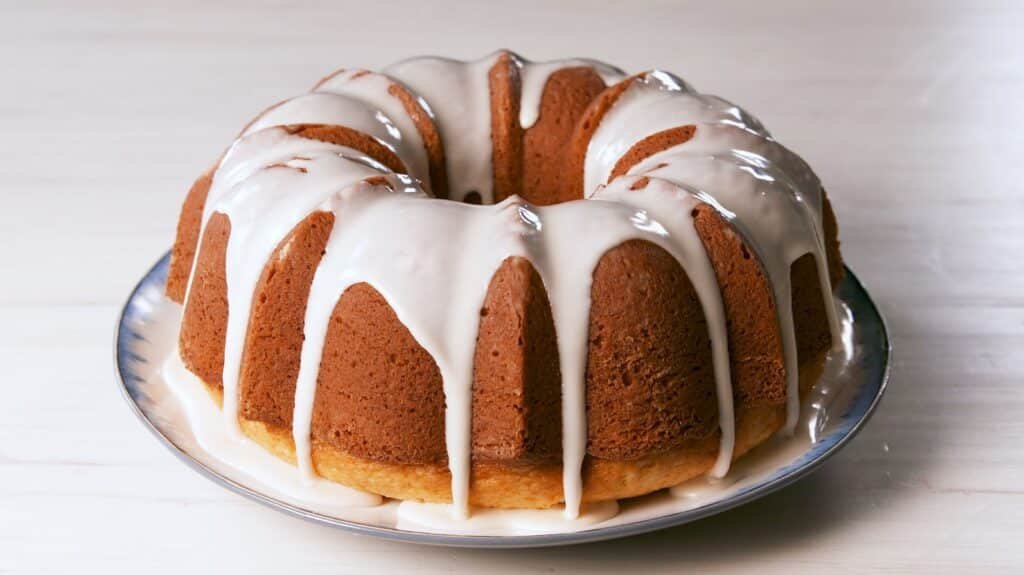
Bake 45 to 55 minutes and keep the door shut for the first 35. It's done when the top springs back instead of holding a dent, the cake has pulled very slightly from the sides, and a long skewer in the thickest part comes out with moist crumbs and no wet batter. An instant-read thermometer in the center of the ring should read 205 to 210°F (96 to 99°C). Start checking at 45 minutes.
-
 8
8Rest exactly 10 minutes, then invert
Set the pan on a wire rack and start a timer for 10 minutes. In that window the crumb firms up enough to carry its own weight while the pan is still hot enough that the surface butter and sugar stay fluid. Set the rack over the pan, flip in one confident motion, and lift the pan straight up. Invert sooner and the warm cake shears; leave it half an hour and steam condenses, the sugars set like glue, and the cake welds into the flutes.
-
9
Cool completely, then glaze or dust
Give it at least 90 minutes on the rack, until the base is cool and not just the crown. Glaze poured onto a warm cake thins out, runs down the flutes and soaks into the crust. For a glaze, whisk 1 cup powdered sugar with 1/2 teaspoon vanilla and 1 to 2 tablespoons milk, a teaspoon at a time, until it ribbons off the whisk and settles in about 5 seconds. Spoon it over the crown and let gravity pull it down the ridges.
Troubleshooting
- Cake stuck in the pan — Usually spray that pooled in the flutes, or a patch missed near the center tube. Return the pan to a 300°F (150°C) oven for 2 to 3 minutes to remelt the surface fat, then rap the rim on a folded towel. Next time use soft butter and flour, or a paste of equal parts butter, flour and oil.
- Sunken middle — The center was underbaked, the door opened during the first 35 minutes, or the leavening went in heaped. Trust the thermometer at 205 to 210°F (96 to 99°C) over the clock, and level off the baking powder and soda.
- Dry crumb — Nearly always scooped flour or five to ten extra minutes in the oven. Spoon and level, or weigh at about 312 g for 2 1/2 cups, and pull the cake the second a skewer shows moist crumbs.
- Tunnels and a tough, chewy texture — Overmixing after the flour went in. Those long vertical holes are gluten strands holding gas in channels. Mix each addition on low for 10 seconds, finish by hand, and stop the instant the streaks disappear.
- Browning too fast — A dark nonstick pan, or an oven running hot. Move the rack to the lower third and tent the top loosely with foil once it's deep golden, around minute 35. Home ovens routinely run 25°F off, so an oven thermometer earns its keep.
- Glaze soaking in or sliding off — Soaking in means the cake was still warm or the glaze was too thin. Sliding off in a sheet means it was too thick, or it all went on at once. Cool fully, aim for heavy-cream consistency, and spoon it on in two or three passes.
Pro tips
- Set the butter, eggs and milk out 60 to 90 minutes ahead. In a hurry, cube the butter and sit the eggs in warm tap water for five minutes.
- Butter and flour the pan first, then park it in the fridge while you mix so the coating doesn't slump down the flutes.
- Weigh the flour if you own a scale. It's the single change that fixes most dry bundt cakes.
- With a dark nonstick pan, drop the oven to 335°F (168°C) and start checking at 42 minutes.
- Level the batter before it bakes, because whatever the top looks like going in is the base the cake stands on.
Variations & substitutions
- Buttermilk crumb: swap the cup of milk for buttermilk. The acid tenderizes and adds a faint tang, and the 1/2 teaspoon of baking soda is already there to react with it.
- Sour cream: use 1/2 cup full-fat sour cream plus 1/2 cup milk for a moister, slightly denser crumb, and add 3 to 5 minutes to the bake.
- Brown butter or almond: brown the butter and chill it back to a soft opaque solid before creaming, or add 1/2 teaspoon almond extract with the vanilla.
- Citrus zest: rub the zest of one lemon into the sugar with your fingertips before creaming. For a properly tart, dense citrus cake, bake the lemon pound cake instead.
- Marble swirl: stir 2 tablespoons cocoa and 1 tablespoon milk into 1 cup of the batter, dollop it in and swirl once with a knife. For an actual chocolate dessert, use a chocolate cake recipe.
Storage & make-ahead
Wrap the cooled cake, or keep it under a dome, at room temperature for 3 to 4 days. It's honestly better on day two, once the butter and vanilla settle. Don't refrigerate it: cold firms the butter and stales the crumb faster than the counter does. Bake it a day ahead and glaze the morning you serve. To freeze, wrap tightly in plastic then foil and freeze whole or sliced for 2 to 3 months, then thaw still wrapped so condensation lands on the plastic rather than the crust.
Serving ideas
A thick slice with black coffee is how most of this cake disappears at my house. For dessert, spoon macerated strawberries over the top with barely sweetened whipped cream, or lean a scoop of vanilla ice cream against a slightly warm slice. Day-three slices toast beautifully cut-side down in butter.
More recipes to try
A plain vanilla crumb is the base I keep coming back to. Swap the vanilla for cocoa and you land on chocolate sponge cake, or go bright and tangy with a layered lemon cake with cream cheese frosting when spring hits. Completely different track, same word: Dungeness crab cakes, for the nights dessert isn't the point.
Recipe
Classic Vanilla Bundt Cake Recipe
This moist and flavorful vanilla bundt cake is a timeless dessert. Made with simple ingredients like butter, sugar, eggs, and flour, it's perfect for any occasion.
Ingredients
- 2 1/2 cups all-purpose flour
- 2 cups granulated sugar
- 1 cup unsalted butter, softened
- Four large eggs
- 1 cup of milk
- 2 teaspoons of vanilla extract
- 1 teaspoon baking powder
- 1/2 teaspoon baking soda
- 1/2 teaspoon salt
Instructions
- Preheat the oven to 350°F/175°C and grease a 10-cup bundt pan with butter or cooking spray.
- Take a mixing basin, and combine the softened butter and granulated sugar until light and fluffy.
- Add the eggs one at a time, beating well after each addition, and then mix in the vanilla essence.
- In a separate basin, combine all-purpose flour, baking powder, baking soda, and salt.
- Add the dry ingredients to the wet components in batches, alternating with the milk, and stir until just mixed. Take care not to overmix.
- Pour the batter into the prepared bundt pan and spread it evenly with a spatula.
- Tap the pan gently on the counter to remove any air bubbles and smooth the batter's surface.
- Bake for 45 to 55 minutes, or until a toothpick inserted in the center of the cake comes out clean.
- Remove the cake from the oven and let it cool for 10 minutes in the pan before transferring it to a wire rack to finish cooling.
- Once cooled, carefully transfer the bundt cake onto a serving dish and dust it with powdered sugar, if desired.
- Slice and serve the classic vanilla bundt cake alone, with a dab of whipped cream, or with vanilla ice cream. Enjoy!
Tips & notes
- Overmixing the batter: This can lead to a tough cake. Mix just until the ingredients are combined.
- Using a cold oven: The cake won't bake evenly. Preheat your oven to the specified temperature before starting.
- Underbaking the cake: A toothpick inserted into the center should come out with moist crumbs attached.
- Removing the cake from the pan too early: Let the cake cool in the pan for a few minutes before inverting it onto a wire rack.
Watch how to make it
Nutrition · per serving (estimate)
Made this recipe?
Tap the stars to leave your rating — it helps other home cooks.
Frequently asked questions
How do I keep a bundt cake from sticking?
Brush soft butter or shortening into every flute and up the center tube until no bare metal shows, then dust with flour and knock out the excess. Cooking spray on its own pools in the grooves and bakes into a sticky film, which is where cakes tear. Turn the cake out after exactly 10 minutes, since waiting longer lets steam condense and grip the pan.
Why do I cool the cake for only 10 minutes before flipping it?
Ten minutes lets the crumb firm up enough to hold its own weight while the pan is still hot enough that the surface butter and sugar stay fluid. Flip sooner and the warm cake can shear or sag. Leave it half an hour and the sugars set like glue, welding the cake into the flutes.
How do I know when the bundt cake is done?
The top should spring back rather than hold a dent, the cake should pull slightly from the sides of the pan, and a long skewer in the thickest part should come out with a few moist crumbs. An instant-read thermometer in the center of the ring reads 205 to 210°F (96 to 99°C). Wet batter on the skewer means give it five more minutes.
Why was my bundt cake dry or tough?
Dry usually means scooped flour or overbaking, while tough means overmixing once the flour went in. Spoon and level the flour, or weigh it at about 312 g for 2 1/2 cups. Mix each flour addition on low for around 10 seconds and stop the instant the streaks vanish.
Why did my bundt cake sink in the middle?
The center was underbaked, the oven door opened too early, or the leavening went in heaped rather than level. Keep the door shut for the first 35 minutes and check doneness with a thermometer instead of the clock. An oven running cold will do it too, so an oven thermometer is worth having.
Can I use buttermilk instead of milk?
Yes, and it's a good swap. Use the same 1 cup of buttermilk; the acid tenderizes the crumb and adds a gentle tang, and the recipe already includes 1/2 teaspoon of baking soda to react with it. The cake browns a shade more deeply, so start checking at 45 minutes.
Can I use salted butter?
Yes. Cut the added salt to 1/4 teaspoon, or skip it entirely if your butter is heavily salted. Unsalted butter is the default mostly because it lets you control the seasoning precisely.
What size bundt pan do I need, and can I use a different pan?
This batter is sized for a 10-cup bundt pan and should fill it about two-thirds. A 12-cup pan works but bakes flatter and faster, so start checking at 40 minutes. You can also split the batter between two 9x5-inch loaf pans and bake 50 to 60 minutes.
Do I have to glaze it, and how do I make a simple vanilla glaze?
No, a dusting of powdered sugar just before serving is plenty. For glaze, whisk about 1 cup powdered sugar with 1/2 teaspoon vanilla and 1 to 2 tablespoons milk, adding liquid a teaspoon at a time until it ribbons off the whisk and settles in about 5 seconds. Only glaze a completely cool cake, or it soaks straight in.
Can I make this cake ahead or freeze it?
Yes. Wrapped at room temperature it keeps 3 to 4 days and arguably tastes better on day two. To freeze, cool it completely, wrap in plastic then foil, and freeze whole or sliced for 2 to 3 months. Thaw it still wrapped so condensation lands on the plastic, then dust or glaze before serving.

Leave a review