
Soft Egg Paratha (Layered, Puffy & Freezer-Friendly)
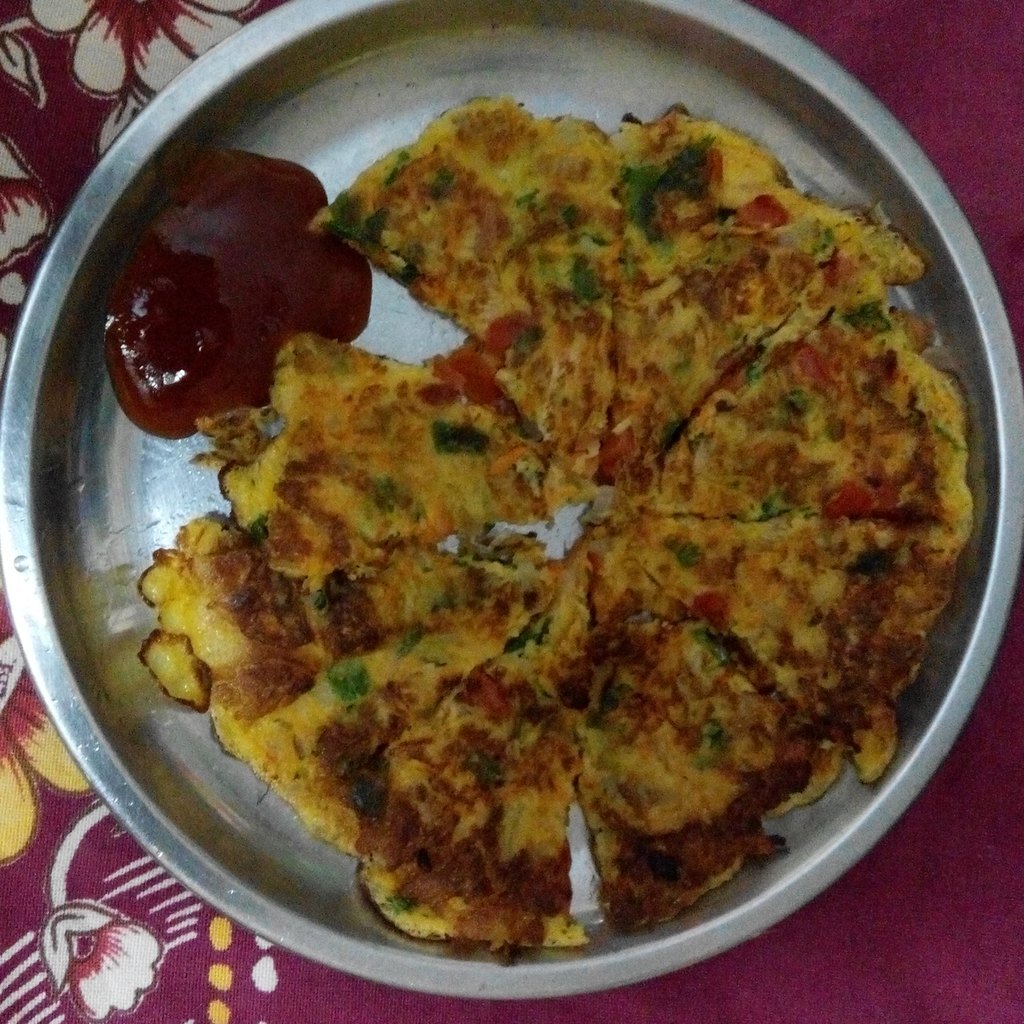
This egg paratha is crisp on the outside, soft and layered inside, and coated in a spiced egg mixture with green chilli, onion and cilantro — breakfast that needs no side dish. It is based on Cooking with ApS’s street-style egg paratha, which has passed 1.7 million views in two weeks. The clever part is the dough: a little grated boiled potato, milk, sugar and a pinch of baking soda keep the parathas soft for days, and a simple oil-and-flour paste between the folds gives distinct, flaky layers that puff up in the pan. You can even half-cook a batch and freeze it, then dip and finish each egg paratha in minutes on a busy morning. If you like stuffed flatbreads, try our chicken tikka paratha rolls too.
Why you'll love this
- Crisp, soft and layered. Thin rolling and a sealed fold give flaky layers that puff like a balloon.
- A full breakfast in one. The spiced egg coating means no separate omelette or side dish.
- Soft for days. Potato and milk in the dough keep the parathas tender, not leathery.
- Freezer-friendly. Half-cook a batch, freeze for up to a month and finish them fresh.
- Adjustable heat. Use as many green chillies as you like, or none.
- Works with wheat flour too. Swap some or all of the maida for atta.
Key ingredients & how to use them
- All-purpose flour (maida) — two cups, sifted. Maida gives the softest, stretchiest dough and the most distinct layers. Whole wheat flour (atta) works, with a slightly denser, nuttier result.
- Boiled potato — one large potato, completely cooled and grated on the finest holes of the grater. Grating matters: hand-mashed potato leaves lumps, and lumps stop the paratha puffing. Do not add more than the recipe calls for, or the dough turns sticky.
- Milk at room temperature — a quarter cup. It softens the dough and helps the parathas take on a lovely golden colour.
- Sugar and baking soda — a teaspoon of sugar for colour and flavour, and just a quarter teaspoon of baking soda for softness. More soda than that leaves a soapy aftertaste.
- Oil and flour paste — three tablespoons of each, mixed. Brushed between the folds, it keeps the layers separate as they cook. Stir it before each use, because the flour settles.
- Eggs — three, cracked one at a time into a cup first so a bad one does not spoil the rest, then whisked with salt, black pepper and crushed red chilli.
- Green chillies, onion and cilantro — the chillies are crushed in a grinder without water, the onion is chopped very finely so it cooks in the short time the paratha is in the pan, and the cilantro goes in fresh.
- Oil for the pan — heat it properly before the paratha goes in. Brush it on, or use a folded cloth, if you want to keep it light.
How to make it (step by step)
-
1
Mix the liquid base
In a deep bowl, stir together the room-temperature milk, 1 tablespoon of oil, the salt, sugar and baking soda until the sugar dissolves.
-
2
Make a soft dough
Add the sifted flour and mix with a spoon until the milk is absorbed. Grate the cooled boiled potato directly into the bowl on the finest holes of the grater, then rub and knead it into the flour. Add water a little at a time, only as needed, and knead into a soft, smooth dough. Rub a little oil over the surface, cover and rest for 15 to 20 minutes.
-
3
Prepare the egg mixture and the paste
Crack the eggs one at a time into a cup, then tip them into a wide, shallow bowl. Add salt, the black pepper, crushed red chilli, crushed green chillies, finely chopped onion and cilantro, and whisk with a fork until smooth with no streaks. In a small bowl, mix the 3 tablespoons of oil with the 3 tablespoons of flour to make the layering paste.
-
4
Divide into balls
Knead the rested dough two or three times until smooth and elastic, then divide it into six equal balls, each about the size you would use for a roti.
-
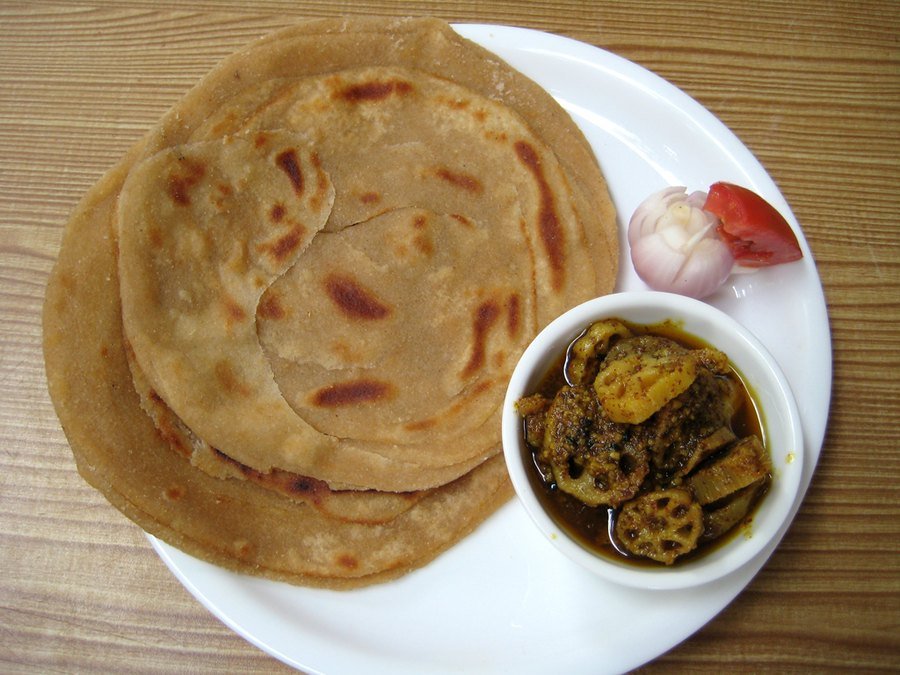
Thin rolling and folding builds the layers. Photo: Sonia Goyal, CC BY-SA 2.0, resized 5Roll very thin and fold
Dust a ball with flour and roll it out as thin as you can — this is the step that decides how many layers you get. Brush lightly with the stirred paste, not so much that it leaks. Fold in the left and right sides to meet, brush with paste again, then fold twice more into a small square. Press the edges firmly to seal all sides; an unsealed paratha will not puff.
-
6
Rest, then roll out again
Let the folded squares rest for 5 minutes so the maida relaxes and stops springing back. Dust with flour and flatten each one with your palms first, then roll it out thin with a rolling pin. Pressing by hand first stops the seal opening up.
-
7
Dip in the egg
Lay a rolled paratha in the bowl of egg mixture and turn it so both sides are well coated, then lift it onto a plate. Moving it from the plate to the pan is far less messy than carrying it dripping straight from the bowl.
-
8
Cook until puffed and golden
Heat a little oil in a pan or tawa over medium heat until hot. Slide in the paratha and spoon a little extra egg on top if you like it eggier. Let it set for a moment, then move it around gently with a spatula so it browns evenly. Flip, and cook the second side until golden and puffed. Keep the heat at medium: too high and the outside colours before the inside cooks.
-
9
Serve, or half-cook and freeze
Serve the parathas hot with tea. To freeze, roll and cook plain parathas (without egg) on low heat until just set and lightly spotted on both sides, cool them completely, then stack in a zip-lock bag or a snug container and freeze for up to a month. Thaw for an hour at room temperature, dip in egg and cook as above.
Troubleshooting
- The paratha did not puff. The edges were not sealed, or it was rolled straight out without pressing first. Seal all sides, flatten with your palms before using the rolling pin, and cook on properly hot oil.
- Not many layers. The first roll was too thick. Roll the dough as thin as you can before applying the paste and folding.
- The dough is sticky. Too much potato or water. Knead in a spoonful of flour at a time, and next time grate the potato finely and add water only when needed.
- The dough keeps shrinking back. Maida needs rest. Give the folded squares 5 minutes before the final roll.
- Raw inside, dark outside. The heat was too high. Cook on medium and move the paratha around so it colours evenly.
- Egg everywhere. Dip in a wide bowl and rest the coated paratha on a plate before sliding it into the pan.
Pro tips
- Grate the potato on the finest holes; lumps are the enemy of a puffy paratha.
- Stir the oil-and-flour paste before every paratha.
- Keep the egg mixture in a wide, shallow bowl for easy dipping.
- Use a brush or folded cloth to oil the pan lightly if you want less oil.
- Prepare all the dough balls at once so the rolling goes quickly.
- Cool half-cooked parathas completely before bagging so they do not stick together.
Variations
- Whole wheat. Use atta instead of maida for a heartier paratha.
- Cut-fold method. Make two cuts on each side of the rolled circle before folding for a different layer pattern.
- Cheese egg paratha. Scatter grated mozzarella over the egg side just before flipping.
- Keema egg paratha. Add a spoonful of cooked spiced mince to the egg mixture.
- Milder version. Skip the green chillies and use only black pepper.
- Lunchbox roll. Roll the cooked paratha around salad and chutney for a quick wrap.
Storage
Freshly cooked egg parathas are best eaten hot, but leftovers keep in the fridge for a day; reheat them on a dry pan. For make-ahead breakfasts, half-cook plain parathas on low heat, cool them completely, and freeze in a zip-lock bag or a container the same size as the parathas for up to a month. Take them out an hour before cooking so they reach room temperature, then dip in freshly whisked egg and cook as usual.
Serving ideas
Egg paratha is traditionally eaten with a cup of chai, with ketchup or a green chutney on the side. For a weekend brunch, serve it with a crisp kachori and fresh fruit, or offer it next to the Dubai viral paratha for a paratha spread.
Watch the original video
This recipe follows the cooking with ApS video, including its dough quantities, the potato trick, the oil-and-flour layering paste and the half-cook freezing method. The step write-up, troubleshooting and FAQs are our own.
Video: cooking with ApS on YouTube.
Featured photo: “Anda Paratha” by Vinodbarc, CC BY-SA 4.0, resized and cropped. Step photos are credited in their captions.
More recipes to try
More parathas: the Dubai viral paratha and chicken tikka paratha rolls. For a tea-time snack, try our kachori.
Recipe
Soft Egg Paratha
Layered egg paratha made with a soft dough of maida, milk and grated boiled potato, folded with an oil-and-flour paste, dipped in a spiced egg, green chilli, onion and cilantro mixture and pan-cooked until puffed.
Ingredients
- 1/4 cup (60 ml) milk, at room temperature
- 1 tablespoon oil
- Salt, to taste (about 3/4 teaspoon)
- 1 teaspoon sugar
- 1/4 teaspoon baking soda
- 2 cups (250 g) all-purpose flour (maida), sifted
- 1 large potato, boiled, cooled and finely grated
- Water, as needed
- Dry flour, for rolling
- 3 tablespoons oil
- 3 tablespoons all-purpose flour
- 3 eggs
- Salt, to taste
- 1/2 teaspoon black pepper powder
- 1/2 teaspoon crushed red chilli or chilli flakes
- 3 green chillies, crushed without water
- 1 small onion, very finely chopped
- 2 tablespoons fresh cilantro, finely chopped
- Oil, for the pan
Instructions
- Mix the milk, 1 tablespoon oil, salt, sugar and baking soda in a deep bowl until the sugar dissolves.
- Add the flour and mix, then grate in the cooled boiled potato on the finest holes. Knead, adding water a little at a time, into a soft dough. Oil the surface, cover and rest 15 to 20 minutes.
- Whisk the eggs with salt, black pepper, crushed red chilli, green chillies, onion and cilantro in a wide bowl. Separately, mix 3 tablespoons oil with 3 tablespoons flour to make a paste.
- Knead the dough briefly until smooth and divide into 6 equal balls.
- Roll a ball out very thin, brush lightly with the paste, fold the sides in to meet, brush again and fold twice more into a square. Seal all the edges firmly.
- Rest the folded squares 5 minutes. Flatten each with your palms, then roll out thin.
- Dip a paratha in the egg mixture to coat both sides and transfer it to a plate.
- Cook in a hot, oiled pan over medium heat, adding a little extra egg on top if you like, moving it so it browns evenly. Flip and cook until golden and puffed.
- Serve hot. To freeze, half-cook plain parathas on low heat, cool completely and freeze up to a month; thaw 1 hour, dip in egg and cook.
Tips & notes
- Grate the potato finely; lumps prevent the paratha from puffing.
- Use only 1/4 teaspoon baking soda — more changes the taste.
- Roll the dough very thin before folding for the most layers.
- Seal all the edges, and press with your palms before rolling the folded square.
- Cook on medium heat so the inside cooks before the outside darkens.
Made this recipe?
Tap the stars to leave your rating — it helps other home cooks.
Frequently asked questions
Why add potato to paratha dough?
Finely grated boiled potato makes the dough softer and keeps the parathas tender for longer, even after freezing. It has to be grated rather than mashed, because lumps of potato stop the layers from puffing up.
Can I make egg paratha with whole wheat flour?
Yes. Whole wheat flour (atta) works well and gives a nuttier, slightly denser paratha. All-purpose flour gives the softest texture and the most distinct layers, so you can also use half and half.
Why didn't my paratha puff up?
The most common reasons are unsealed edges, rolling the folded dough without pressing it flat by hand first, or a pan that was not hot enough. Seal all sides, flatten with your palms, then roll, and heat the oil well before cooking.
How do I get more layers in my paratha?
Roll the first circle as thin as possible before brushing on the oil-and-flour paste and folding. A small, thick circle gives only a few layers. Brushing the paste between each fold keeps the layers separate.
What is the oil and flour paste for?
It acts as a barrier between the folded layers. The oil keeps them from fusing together and the flour stops the oil from soaking straight into the dough, which is what makes the layers flake apart after cooking.
Can I freeze egg paratha?
Freeze the parathas half-cooked and without egg. Cook them on low heat until just set, cool completely, and freeze in a zip-lock bag for up to a month. Thaw for an hour, dip in egg and cook as normal.
How much baking soda should I use?
Just a quarter teaspoon for two cups of flour. It softens the dough and helps it puff, but more than that can leave a soapy, bitter taste in the finished paratha.
How many green chillies should I add?
The recipe uses three, crushed without water, for a noticeable kick. Use one for mild heat or leave them out entirely; the black pepper and crushed red chilli still give the egg mixture plenty of flavour.
What do you serve with egg paratha?
It is a complete breakfast on its own, usually eaten with a cup of chai. Ketchup, green chutney or plain yogurt on the side all work well, and it also makes a good lunchbox wrap.
Can I use less oil?
Yes. Brush the pan lightly with oil using a pastry brush or a folded clean cloth instead of pouring it in. The paratha will be a little less crisp but still soft and layered.

Leave a review