
Bread Gulab Jamun (The Viral No-Khoya Recipe)
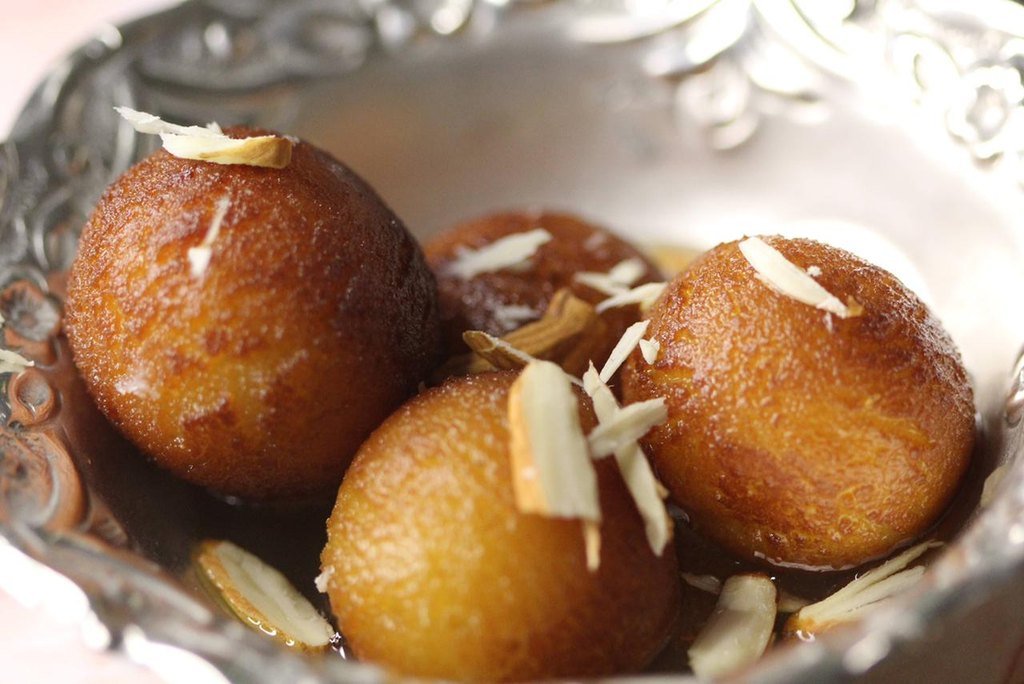
Bread gulab jamun is the fastest-rising recipe on YouTube right now: Village Cooking Channel’s version passed 12 million views within two weeks of going up in late September. The idea is wonderfully simple — no khoya, no milk powder, no special flour. Crumble soft white bread, bring it together with warm boiled milk, roll it into small balls, fry them slowly and let them drink up a cardamom sugar syrup until they are plump and soft all the way through. We have taken the method from that video and scaled it down from a village-sized pot to a home kitchen, with measured quantities and the details that stop bread jamuns cracking or staying hard. If you want the traditional khoya version for comparison, our classic gulab jamun is here too.
Why you'll love this
- Three main ingredients. Bread, milk and sugar — everything is probably in your kitchen already.
- No khoya hunt. The bread does the job khoya normally does, so you can make these on a whim.
- Soft and syrupy. Fried slowly and soaked properly, they are spongy right to the centre.
- Festival-ready. An easy, crowd-sized Diwali sweet that you can make the day before.
- Uses up bread. Day-old slices work beautifully as long as they are not dry and hard.
- Kid-friendly job. Rolling the little balls is the perfect task to hand over.
Key ingredients & how to use them
- Soft white sandwich bread — the whole recipe depends on it. Plain, soft white bread gives the smoothest dough and the lightest jamuns. Brown or multigrain bread makes them dense and dark, and very dry or stale bread will not bind. Trim the crusts: they do not soften the way the crumb does and leave the surface rough and prone to cracking.
- Milk, boiled then cooled to warm — boiling it first, as the cooks do in the video, gives a richer, slightly cooked-milk flavour. Add it a spoonful at a time. Bread varies a lot in how much it absorbs, and too much milk makes a sticky dough that falls apart in the oil.
- Sugar — for a syrup thin enough to soak in. One part sugar to one part water, simmered just until slightly sticky, is right for bread jamuns; a thick, stringy syrup coats the outside and never reaches the middle.
- Green cardamom — crushed pods in the syrup and a pinch of ground cardamom in the dough. It is the flavour people recognise as gulab jamun.
- Lemon juice — half a teaspoon stops the syrup crystallising as it cools, so it stays clear and glossy.
- Rose water and saffron — optional, added after the syrup comes off the heat so their perfume is not cooked away. The “gulab” in the name means rose.
- Frying oil — the video uses cold-pressed gingelly (sesame) oil, which adds a gentle nutty note. Any neutral oil works. What matters more is keeping it at a low, steady heat.
- Ghee — a teaspoon kneaded into the dough is optional, but it makes the jamuns a little richer and helps the surface stay smooth.
How to make it (step by step)
-
1
Make the syrup first
Put the sugar, water and crushed cardamom pods in a wide pan and bring to a boil, stirring until the sugar dissolves. Simmer for 5 to 6 minutes, until the syrup feels slightly sticky between two fingers but does not form a thread. Stir in the lemon juice, then take it off the heat and add the rose water and saffron if using. Keep it warm. A warm, thin syrup is what lets the jamuns soak right through.
-
2
Trim and crumble the bread
Cut the crusts off all the slices. Tear the bread into pieces and rub or pulse it into fine, even crumbs — a few seconds in a food processor does it, or crumble it between your fingers. The finer the crumbs, the smoother the dough, and the less likely the jamuns are to crack.
-
3
Add the warm milk a little at a time
Stir the ground cardamom into the crumbs. Add the warm milk a tablespoon at a time, pressing and mashing as you go. Break up every lump with your fingertips: any dry pocket of crumb stays dry inside the finished jamun. Stop as soon as the crumbs come together. You may not need all the milk.
-
4
Knead into a soft, smooth dough
Add the ghee if using and knead gently for 1 to 2 minutes, until the dough is soft, smooth and only slightly tacky. If it sticks to your hands, add a spoonful more crumb; if it cracks when pressed, add a few drops of milk. Cover and rest it for 5 minutes so the bread finishes absorbing the milk.
-
5
Roll small, crack-free balls
Grease your palms lightly and divide the dough into about 16 portions. Roll each one gently between your palms into a smooth ball, with no cracks or seams on the surface — cracks open up in the oil. Do not press hard: a firmly squeezed ball fries up dense. Keep them small, about the size of a large marble, because they swell in the syrup.
-
6
Heat the oil low and slow
Heat the oil in a kadai or heavy pan over low to medium-low heat, to about 300 to 320°F (150 to 160°C). Drop in a pinch of dough to test: it should rise slowly with small, steady bubbles rather than sizzling hard. Hot oil browns the outside in seconds and leaves the centre raw and hard.
-
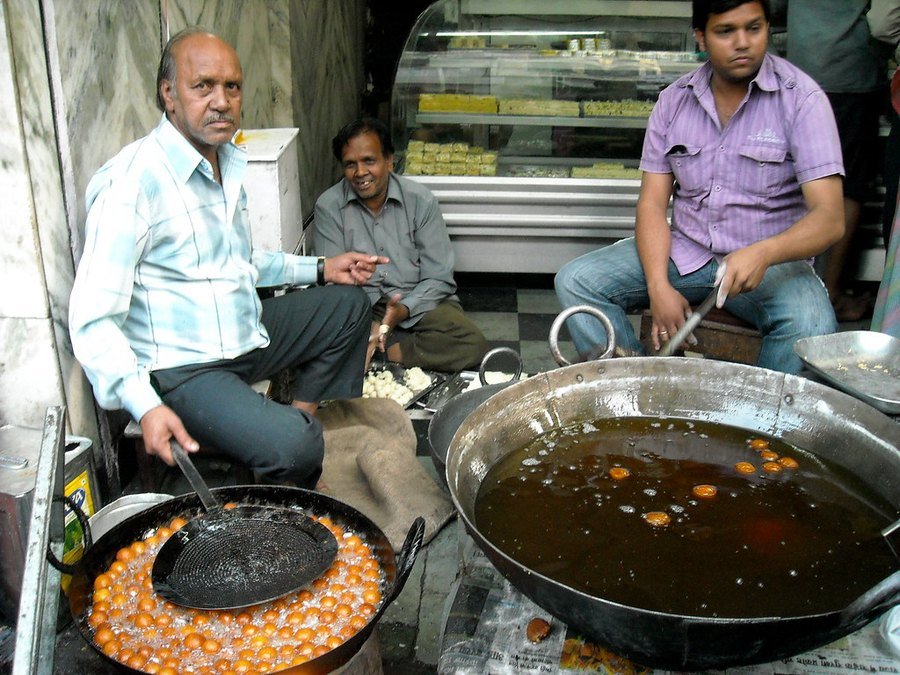
Slow-frying, then straight into syrup. Photo: Sistak, CC BY-SA 2.0, resized. 7Fry until deep golden brown
Fry the balls in batches without crowding the pan, gently nudging the oil over them rather than prodding them. Keep them moving for 5 to 7 minutes, until they are evenly deep golden brown all over. Lift them out with a slotted spoon and let them sit for 1 minute so they are not sizzling when they go into the syrup.
-
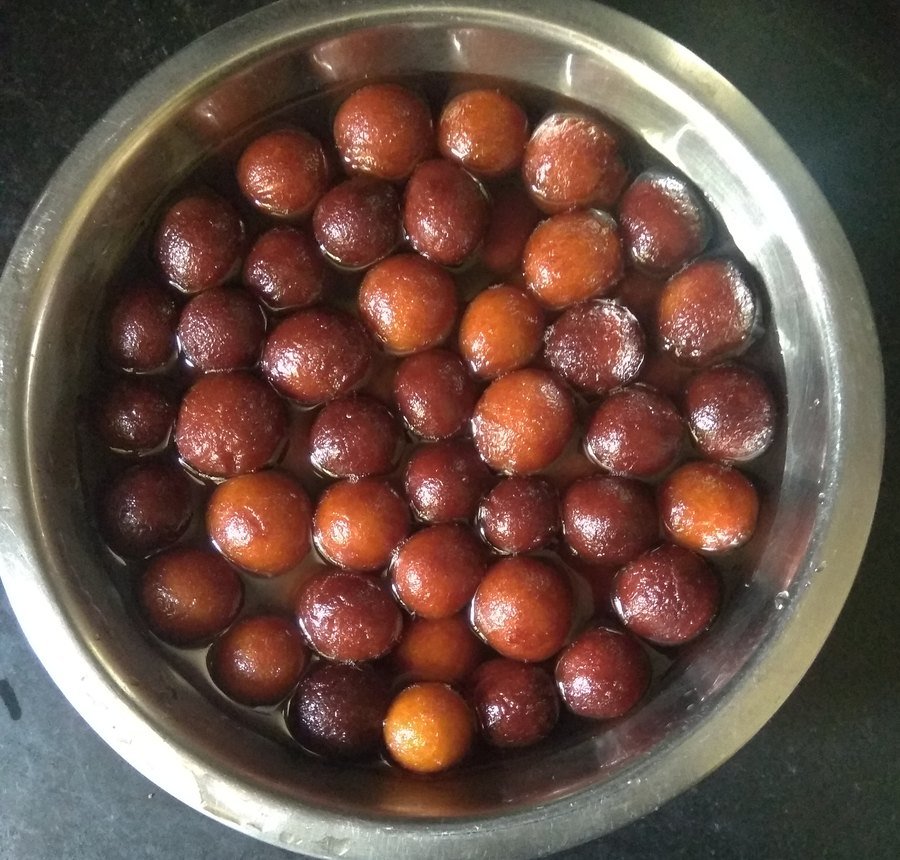
Soaked until plump. Photo: Yakshitha, CC BY-SA 4.0, cropped. 8Soak in warm syrup
Drop the fried jamuns into the warm (not boiling) syrup. They will float at first and slowly sink as they drink it in. Soak for at least 2 hours. Overnight is better — that is exactly what the cooks in the video do, and by morning the jamuns have swollen and turned soft and juicy all the way through.
-
9
Serve warm or at room temperature
Warm the jamuns and a little syrup gently before serving, or serve them at room temperature. Scatter with chopped pistachios or slivered almonds. Two or three per person, with a spoonful of syrup, is a generous serving.
Troubleshooting
- They cracked in the oil. The dough was too dry or the balls had seams. Knead in a few drops of milk and roll each ball until the surface is completely smooth.
- They broke apart or dissolved. Too much milk, so the dough was too wet to hold. Knead in more fine crumb until it is soft but no longer sticky, and test one ball before frying the batch.
- Dark outside, hard inside. The oil was too hot. Lower the heat until the test piece rises slowly with small bubbles, and give each batch the full 5 to 7 minutes.
- They stayed firm after soaking. The syrup was too thick or too cold, or they did not soak long enough. Warm the syrup with a splash of water and let them sit longer — overnight fixes most cases.
- The syrup crystallised. It boiled too long or skipped the lemon juice. Add a few tablespoons of water and a squeeze of lemon and warm it gently until clear.
- They taste bready. Use plain white bread, cut off all the crusts, and be generous with cardamom and rose water.
Pro tips
- Make the syrup before the dough so it is ready and warm when the first batch comes out.
- Fry one test ball first; it tells you whether the dough and the oil are right before you commit.
- Roll gently with greased palms — soft pressure gives soft jamuns.
- Keep the flame low and the jamuns moving for an even colour.
- Rest fried jamuns for a minute before they go into the syrup so they do not shrivel.
- Soak overnight when you can; it makes the biggest difference to texture.
Variations
- Stuffed. Press a little chopped pistachio, cardamom and sugar into the centre of each ball before rolling it smooth.
- Kala jamun. Fry a few minutes longer until very dark brown for a deeper, caramelised flavour.
- Saffron syrup. Steep a generous pinch of saffron in the warm syrup for a golden colour and floral aroma.
- Oval jamuns. As the cooks in the video say, there is no rule that they have to be round — roll small ovals instead.
- Gulab jamun sundae. Halve warm jamuns over vanilla or mango ice cream and spoon over a little syrup.
- Richer dough. Knead in 1 to 2 tablespoons of milk powder with the crumbs for a more khoya-like taste.
Storage
Keep the jamuns in their syrup in a covered container. They last a day at room temperature in a cool kitchen and up to 4 days in the fridge, where the syrup thickens slightly. Warm them gently in the syrup on the stove, or in the microwave in short bursts, before serving. You can also fry them a day ahead and soak them overnight, which is the easiest way to make them for a festival. Freezing is not recommended: the bread texture turns grainy once thawed.
Serving ideas
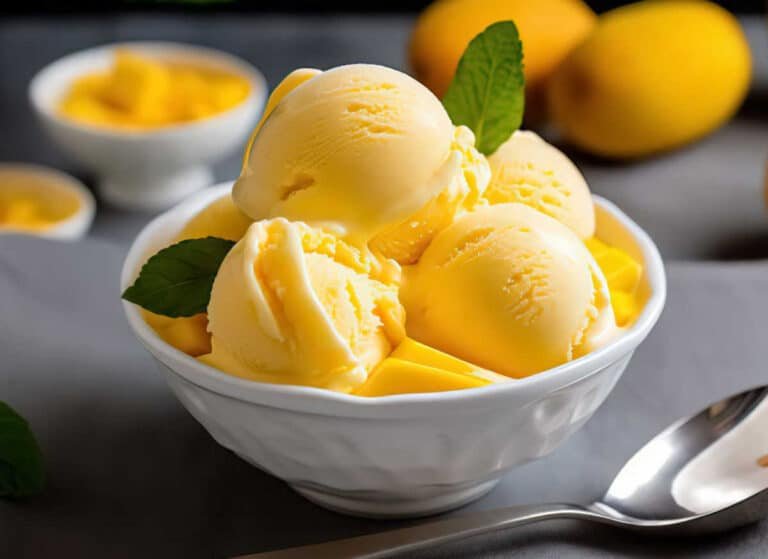
Serve bread gulab jamun warm on its own, or over a scoop of our mango ice cream for a hot-and-cold dessert. For a Diwali spread, set it out next to crisp kachori and another bread-based favourite, shahi tukray, so guests get something savoury and something rich alongside it.
Watch the original video
The method above comes from Village Cooking Channel’s viral bread gulab jamun video, where they make it for the whole village and soak the jamuns overnight before tasting them. Quantities, temperatures and the troubleshooting guide are our own, written for a home kitchen.
Video: Village Cooking Channel on YouTube.
Featured photo: “Gulab Jamun, New Delhi” by Bulbul10, CC BY-SA 4.0, resized and cropped. Step photos are credited in their captions.
Recipe
Bread Gulab Jamun
Soft gulab jamun made without khoya: crumbled white bread kneaded with warm boiled milk, rolled into small balls, slow-fried and soaked in cardamom sugar syrup.
Ingredients
- 1 1/2 cups (300 g) sugar
- 1 1/2 cups (360 ml) water
- 4 green cardamom pods, lightly crushed
- 1/2 teaspoon lemon juice
- 1 teaspoon rose water (optional)
- A few saffron strands (optional)
- 8 slices soft white sandwich bread (about 250 g)
- 1/3 to 1/2 cup (80–120 ml) milk, boiled and cooled until warm
- 1/4 teaspoon ground cardamom
- 1 teaspoon ghee (optional)
- About 3 cups neutral oil or cold-pressed sesame oil, for deep-frying
- 2 tablespoons chopped pistachios or slivered almonds, to garnish
Instructions
- Combine the sugar, water and crushed cardamom in a wide pan and bring to a boil, stirring until the sugar dissolves. Simmer 5 to 6 minutes until slightly sticky but not stringy. Stir in the lemon juice, remove from the heat, add rose water and saffron if using, and keep warm.
- Cut the crusts off the bread, tear it into pieces and rub or pulse it into fine, even crumbs.
- Stir the ground cardamom into the crumbs. Add the warm milk a tablespoon at a time, mashing out every lump, until the crumbs just come together.
- Add the ghee if using and knead gently for 1 to 2 minutes into a soft, smooth, slightly tacky dough. Cover and rest for 5 minutes.
- With lightly greased palms, divide the dough into about 16 portions and roll each gently into a smooth, crack-free ball the size of a large marble.
- Heat the oil over low to medium-low heat to 300–320°F (150–160°C). A test piece should rise slowly with small bubbles.
- Fry the balls in batches, keeping them moving, for 5 to 7 minutes until evenly deep golden brown. Rest for 1 minute.
- Add the fried jamuns to the warm syrup and soak for at least 2 hours, or overnight for the softest result.
- Serve warm or at room temperature with a little syrup, garnished with pistachios or almonds.
Tips & notes
- Use soft plain white bread and cut off all the crusts for smooth, crack-free jamuns.
- Add the milk gradually — bread varies, and a wet dough falls apart in the oil.
- Fry on low heat (300–320°F / 150–160°C) so the centres cook through.
- Soaking time is not included in the total time: allow at least 2 hours, ideally overnight.
- Keep the syrup thin and warm; a thick syrup will not soak into the centre.
Made this recipe?
Tap the stars to leave your rating — it helps other home cooks.
Frequently asked questions
What is bread gulab jamun?
It is a quick version of gulab jamun that uses soft white bread and milk instead of khoya or milk powder. The bread is crumbled, kneaded with warm milk into a dough, rolled into balls, deep-fried slowly and soaked in cardamom sugar syrup until soft and juicy.
Why is this bread gulab jamun recipe trending?
Village Cooking Channel's bread gulab jamun video passed 12 million views within two weeks of being posted in late September 2026, right before the Diwali season. It needs only bread, milk and sugar, which makes it an easy festival sweet for anyone without khoya on hand.
Which bread is best for gulab jamun?
Soft white sandwich bread. It makes the smoothest dough and the lightest, softest jamuns. Brown, multigrain or whole wheat bread makes them dense and dark, and very dry bread will not bind properly. Always cut off the crusts.
Why are my bread gulab jamuns cracking?
Cracks come from a dough that is too dry or balls that were not rolled smooth. Knead in a few drops of warm milk until the dough is soft and slightly tacky, and roll each ball gently until there are no seams or lines on the surface.
Why did my gulab jamuns stay hard inside?
Either the oil was too hot, so the outside browned before the centre cooked, or the jamuns did not soak long enough in a warm, thin syrup. Fry on low heat for 5 to 7 minutes and soak for at least 2 hours, ideally overnight.
How long should bread gulab jamun soak in syrup?
At least 2 hours, but overnight gives the softest, juiciest result. In the original video the cooks leave them in the syrup overnight, and by morning they have swollen and turned soft all the way through.
Can I make bread gulab jamun without milk?
Milk is what binds the crumbs and gives the jamuns their flavour, so it is worth using. If you need to, water will bind the dough, but the jamuns will taste more bready and less rich. A tablespoon of milk powder in the crumbs helps if you use water.
Can I bake or air-fry bread gulab jamun?
You can, but they will not be the same. Deep-frying is what creates the thin crust and spongy interior that soaks up syrup. Air-fried or baked bread balls stay drier and absorb less syrup, so they are firmer and less juicy.
How do I store leftover gulab jamun?
Keep them submerged in their syrup in a covered container for up to a day at cool room temperature or up to 4 days in the fridge. Warm them gently in the syrup before serving. Freezing is not recommended because the bread texture turns grainy.
How is this different from classic gulab jamun?
Classic gulab jamun is made from khoya (reduced milk solids) or milk powder, which gives a denser, milkier texture. Bread gulab jamun is lighter and spongier, takes a fraction of the time and uses ingredients most kitchens already have.

Leave a review