
Rich Homemade Chicken Soup (The Viral Two-Stage Method)
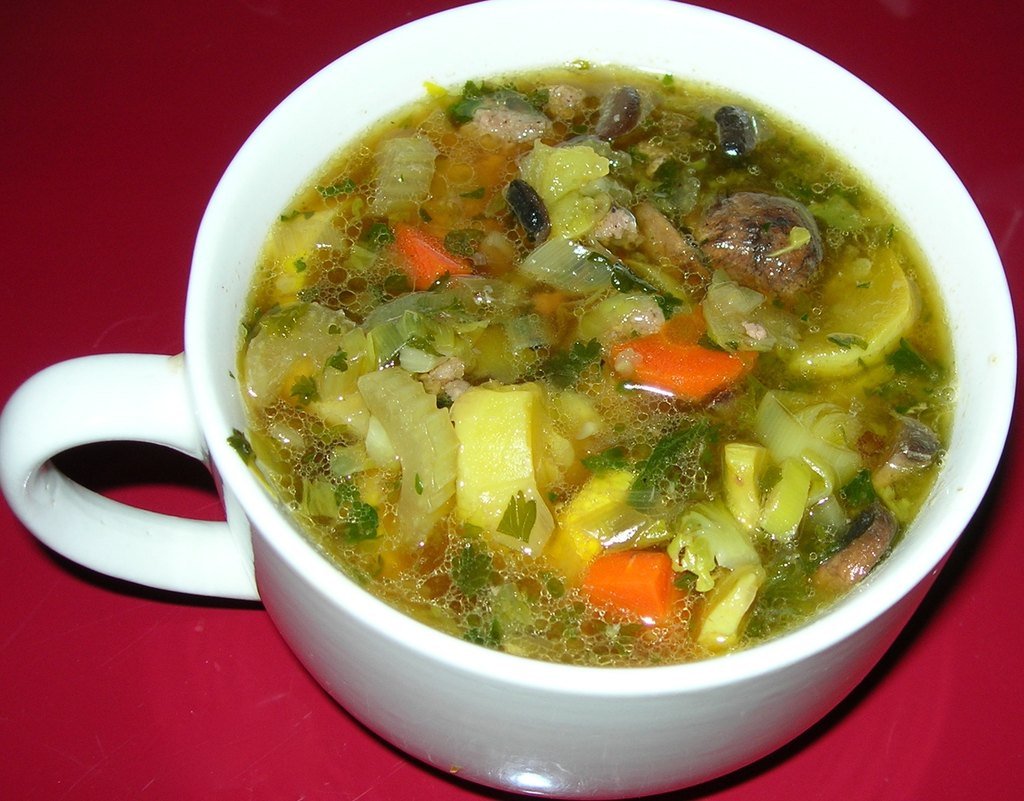
Most homemade chicken soup goes wrong in the same way: everything goes into the pot at once and simmers for the same long time, so the broth is thin, the chicken is stringy and the vegetables are mush. SAMUKICHI’s viral Japanese home-cooking video — close to two million views in two weeks — fixes all three by giving each ingredient its own cooking time. You brown bone-in thighs for flavour, pull the meat out the moment it is cooked, keep simmering the bones for body, strain the broth clear, and only then cook fresh vegetables for the bowl. It takes a little longer, but the result is a golden, deeply savoury homemade chicken soup with tender, juicy chicken. For a heartier chicken dinner, our creamy chicken pot pie uses the same comforting flavours.
Why you'll love this
- Deep, golden broth. Browning the chicken and simmering the bones separately builds real body.
- Tender chicken, never stringy. The meat comes out as soon as it is cooked and goes back in at the end.
- Vegetables with bite. Fresh carrot and celery are cooked just for the bowl, so they keep their colour.
- Clear and clean. Gentle simmering and a paper-towel strain keep the soup bright, not cloudy.
- Barely any seasoning needed. When the flavour is built properly, a pinch of salt is enough.
- Two meals in one. Serve it as a soup, or pour it over noodles for a fuller bowl.
Key ingredients & how to use them
- Bone-in, skin-on chicken thighs — the single most important choice. The skin renders fat for browning, and the bones and the meat around them give the broth its richness and body. Boneless chicken makes a perfectly nice soup, just a lighter one.
- No added oil — the thighs go into a dry pot skin-side down and fry in their own fat. That rendered fat is what the onion and garlic cook in.
- Onion, garlic, carrot and celery for the broth — these are the flavour vegetables. They are sautéed in the chicken fat, simmered, and then strained out and discarded once they have given everything they have.
- A second, fresh carrot and celery for serving — added to the strained broth near the end and cooked just until tender. Using the leafy top of the celery for the broth and the crisp stem end for the bowl uses the whole stalk.
- Thyme and a bay leaf — about 1 g of dried thyme (roughly half a teaspoon) and one bay leaf. Enough for aroma without turning it into an herb soup.
- Water — 700 ml to start, topped up as it evaporates, and adjusted to about 500 to 550 ml of finished broth for two generous bowls.
- A thermometer — optional, but it is how you know to lift the chicken out at 176 to 185°F (80 to 85°C), before it has a chance to dry out.
- Salt, black pepper and dried parsley — added at the very end, sparingly. Taste first.
How to make it (step by step)
-
1
Brown the chicken in a dry pot
Pat the thighs dry with paper towels. Put them skin-side down in a cold-to-medium pot without any oil and cook over medium heat until the fat renders and the skin turns golden. Flip and colour the other side lightly — it does not need to be deeply browned or cooked through. Lift the chicken out onto a plate.
-
2
Sauté the broth vegetables
Lower the heat and cook the onion slowly in the chicken fat until soft. Add the garlic for a minute until fragrant, then pour in a splash of water and scrape up every browned bit from the base of the pot; that fond is where much of the roasted flavour lives. Add the first piece of carrot and the leafy half of the celery and cook briefly, then add the thyme and bay leaf.
-
3
Simmer gently with the chicken
Return the chicken to the pot and add the 700 ml of water. Bring it up slowly over medium heat. As soon as it boils, turn it down so small bubbles rise lazily to the surface — never a rolling boil, which clouds the broth and dulls the aroma. Skim the white foam as it appears, but leave some of the golden fat. Simmer for 25 to 30 minutes.
-
4
Take the chicken out as soon as it is cooked
Check the thickest thigh with a thermometer, away from the bone. At 176 to 185°F (80 to 85°C), lift the chicken out. Left in the pot any longer, it keeps cooking and toughens. When it is cool enough to handle, pull the meat from the bones and set it aside, covered.
-
5
Simmer the bones for body
Put the bones back into the pot, top up with water to replace what has evaporated, and keep simmering gently with the original vegetables for another 30 to 40 minutes. Add a little more water if the level drops. This is where the broth goes from pleasant to rich.
-
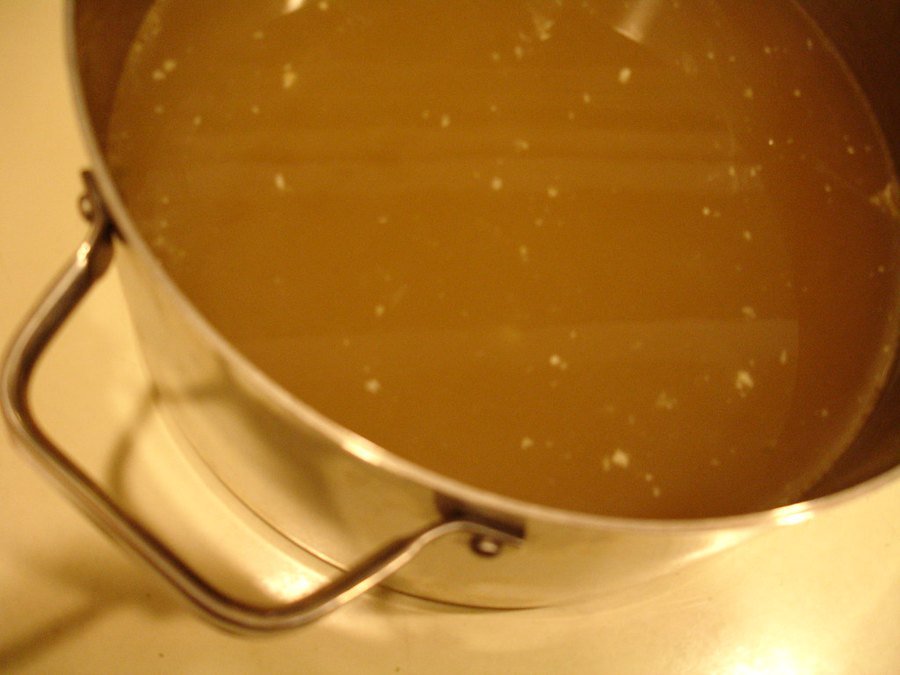
Strain it clear and golden. Photo: Merelymel13, CC BY-SA 2.0, resized 6Strain the broth clear
Line a sieve with a paper towel and pour the broth through it, discarding the bones, the spent vegetables and the herbs. The paper catches the fine particles that would cloud the soup. You should have a clear, golden broth.
-
7
Cook the serving vegetables
Return the broth to the clean pot and add water if needed to bring it to about 500 to 550 ml. Add the fresh carrot and heat over medium until small bubbles appear, then lower the heat and cook for 4 to 5 minutes. Add the stem half of the celery and cook for 3 to 5 minutes more, until both are tender but still have a little bite.
-
8
Season and warm the chicken through
Season with a small amount of salt and black pepper, then turn off the heat. Return the reserved chicken to the pot and let the residual heat warm it through — do not simmer it again. Taste, and add a pinch more salt only if it needs it.
-
9
Serve straight away
Ladle the soup into bowls and finish with dried parsley and a little more black pepper. Serve it as it is, or pour it over cooked noodles for a heartier meal.
Troubleshooting
- The broth is cloudy. It boiled hard. Keep it at a gentle simmer with small, slow bubbles, skim the foam early, and strain through a paper-towel-lined sieve.
- It tastes thin and watery. The bones did not get their second simmer, or there was too much water. Give the bones the full 30 to 40 minutes and finish at about 500 to 550 ml for two servings.
- The chicken is dry and stringy. It stayed in the pot too long. Pull it at 176 to 185°F (80 to 85°C) and only warm it in the hot soup at the end.
- The vegetables are mushy. They were simmered for the whole cook. The broth vegetables are for flavour and get discarded; the serving vegetables go in fresh for just 7 to 10 minutes.
- The soup is greasy. Some fat is good for flavour, but if there is a thick layer, chill the strained broth and lift the solid fat off, or blot the surface with a paper towel.
- The skin stuck to the pot. It was moved too soon. Leave it skin-side down until it releases on its own once the fat has rendered.
Pro tips
- Dry the chicken skin thoroughly so it browns instead of steaming.
- Deglaze the fond with a splash of water before adding the vegetables — it is free flavour.
- Skim the foam, but do not chase every drop of fat; a little keeps the aroma.
- Use the leafy celery top for the broth and the crisp stem for the bowl.
- Double the batch and freeze the strained broth on its own for quick soups later.
- Taste before salting — a well-made broth needs very little.
Variations
- Chicken noodle soup. Pour the finished soup over cooked egg noodles, udon or ramen.
- Ginger and scallion. Add a few slices of ginger to the broth and finish with sliced scallions.
- Lighter, clearer broth. Skip the browning and start the chicken in cold water for a cleaner, paler soup.
- Extra vegetables. Add diced potato, turnip or leek with the serving carrot.
- Rice soup. Stir in a spoonful of cooked rice per bowl just before serving.
- Bigger batch. Scale everything up proportionally for a family pot; the timings stay the same.
Storage
Cool the soup quickly and refrigerate it within 2 hours. It keeps for 3 to 4 days in an airtight container. For the best texture, store the strained broth separately from the chicken and vegetables, and reheat the broth first before adding the rest, so the chicken does not overcook. The broth freezes well for up to 3 months; the cooked vegetables soften a little when frozen, so add fresh ones when you reheat if you can.
Serving ideas
Serve this homemade chicken soup with something to dip: warm garlic knots or our cheesy bread rolls are perfect. For a fuller chicken dinner, follow it with chicken and yellow rice, or pour the soup over noodles for a one-bowl meal.
Watch the original video
This recipe follows SAMUKICHI’s step-by-step video, including its quantities for two servings, the 176–185°F pull temperature and the two-stage simmer. The explanations, troubleshooting and FAQs are our own.
Video: SAMUKICHI on YouTube.
Featured photo: “Chicken Vegetable Soup” by Cajsa Lilliehook from Portland, CC BY-SA 2.0, resized and cropped. Step photos are credited in their captions.
More recipes to try
Serve it with garlic knots or cheesy bread rolls. For a heartier chicken dinner, try the creamy chicken pot pie or the chicken fricassee.
Recipe
Rich Homemade Chicken Soup
Homemade chicken soup made in two stages: browned bone-in thighs simmered with aromatics, bones simmered again for body, a clear strained broth, and fresh carrot and celery cooked just before serving.
Ingredients
- 14 to 18 oz (400 to 500 g) bone-in, skin-on chicken thighs
- 1/2 onion, sliced
- 2 garlic cloves, sliced
- 1/3 carrot, chopped
- 1/2 celery stalk, leafy end, chopped
- About 1 g dried thyme (roughly 1/2 teaspoon)
- 1 bay leaf
- 700 ml (about 3 cups) water, plus more to top up
- 1/3 carrot, sliced
- 1/2 celery stalk, stem end, sliced
- Salt, to taste
- Black pepper, to taste
- Dried parsley, to garnish
- Cooked noodles, to serve (optional)
Instructions
- Pat the chicken dry. Cook skin-side down in a pot without oil over medium heat until the fat renders and the skin is golden. Flip, lightly colour the other side, then remove the chicken.
- Lower the heat and slowly soften the onion in the chicken fat. Add the garlic, then a splash of water to dissolve the browned bits. Add the first carrot and the leafy celery, then the thyme and bay leaf.
- Return the chicken, add 700 ml water and bring slowly to a boil over medium heat. Lower to a gentle simmer, skimming the foam, for 25 to 30 minutes.
- Remove the chicken when the thickest part reaches 176–185°F (80–85°C). Let it cool slightly, then pull the meat from the bones and set it aside.
- Return the bones to the pot, top up with water, and simmer gently with the vegetables for another 30 to 40 minutes, adding water if needed.
- Strain the broth through a sieve lined with a paper towel, discarding the bones, vegetables and herbs.
- Return the broth to the pot, adjust to about 500–550 ml with water, add the fresh carrot and cook gently 4 to 5 minutes. Add the celery stem and cook 3 to 5 minutes more.
- Season lightly with salt and pepper, turn off the heat and return the chicken to warm through without simmering. Taste and adjust.
- Serve topped with dried parsley and black pepper, on its own or over cooked noodles.
Tips & notes
- Keep the soup at a gentle simmer throughout; a hard boil makes it cloudy.
- Lift the chicken out at 176–185°F (80–85°C) so it stays tender.
- The broth vegetables are discarded after straining; the serving vegetables are cooked fresh.
- Season at the very end and sparingly.
- The recipe scales up easily; the cooking times stay roughly the same.
Made this recipe?
Tap the stars to leave your rating — it helps other home cooks.
Frequently asked questions
Why brown the chicken before making soup?
Browning renders the fat from the skin and creates browned bits on the base of the pot. Those, plus the onion cooked in the chicken fat, give the broth a deeper, roasted flavour and a golden colour that you do not get from simply boiling chicken in water.
Can I use boneless chicken for this soup?
Yes, it will still be delicious, just lighter. The bones and skin are what add richness and body, so with boneless chicken you may want to use a little good stock in place of some of the water.
Why remove the chicken before the soup is finished?
Chicken toughens the longer it simmers. Taking it out as soon as it reaches 176–185°F (80–85°C) keeps it moist, while the bones go back in to keep building flavour. The meat only returns at the end to warm through.
How do I keep chicken soup from going cloudy?
Never let it boil hard. Bring it up slowly, keep it at a gentle simmer with small bubbles, skim off the foam as it rises, and strain the finished broth through a sieve lined with a paper towel.
Why are there two sets of vegetables?
The first set is for flavour: it simmers for over an hour, gives everything to the broth and is then discarded. The second set is for eating: it is cooked for just a few minutes so it stays colourful and keeps some texture.
Should I skim off all the fat?
No. Skim the foam and any excess, but a little chicken fat carries aroma and richness. If the soup looks greasy, chill the broth and lift off the solid fat, then keep a small amount.
How much salt does homemade chicken soup need?
Less than you might think when the broth is made this way. Add a small pinch at the end, taste, and only add more if needed. Seasoning early can leave the soup over-salted once it reduces.
Can I add noodles to this soup?
Yes. Cook the noodles separately and pour the hot soup over them in the bowl. Cooking noodles in the soup releases starch that clouds the broth and makes the noodles soft if there are leftovers.
Can I freeze homemade chicken soup?
The strained broth freezes very well for up to 3 months. Freeze the chicken separately if you can, and cook fresh vegetables when you reheat, because frozen cooked carrot and celery turn soft.
How do I scale this chicken soup up for a family?
Multiply all the ingredients by the number of servings you need; the recipe as written makes two bowls. The cooking times stay roughly the same, though a larger pot can take longer to come to a simmer.


Leave a review