
Mango Chantilly Swiss Roll Cake Recipes
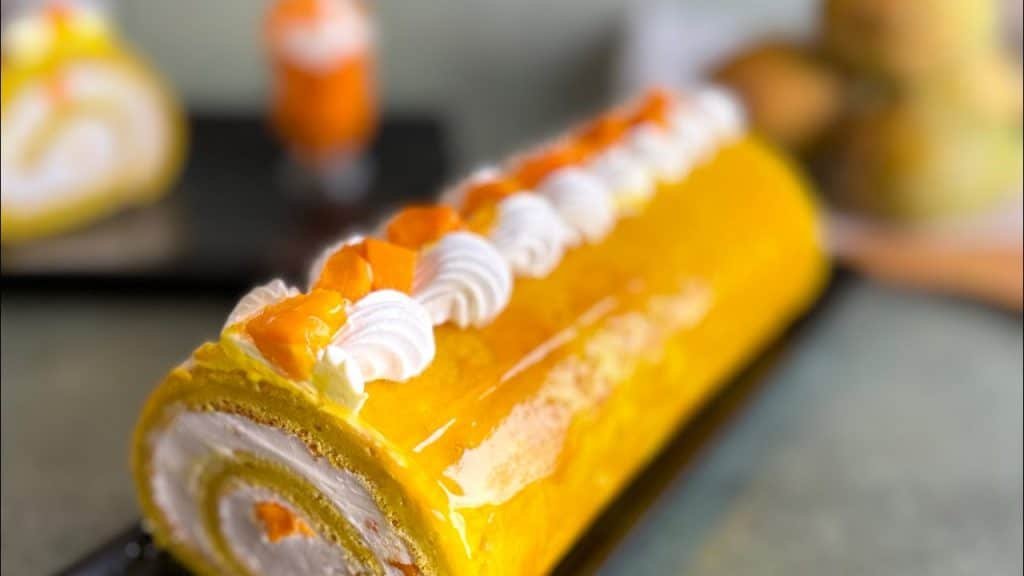
This mango Chantilly Swiss roll wraps a feather-light genoise sponge around clouds of softly whipped vanilla cream and ribbons of ripe mango. It looks like a patisserie window centrepiece, but the sponge bakes in barely 12 minutes and the whole thing sets in half an hour. The trick that makes it work is rolling the warm sponge in a towel so it learns the curl and unrolls later without a single crack.
Why you'll love this
- A whole-egg genoise whipped to triple its volume bakes light and stays supple enough to roll
- Lightly sweetened Chantilly cream and fresh mango keep it fruity and airy, never heavy
- Rolling the hot sponge in a sugared towel trains the curl so it won't split when you fill it
- Just 25 minutes of hands-on work and a quick 30-minute chill before slicing
Key ingredients & swaps
- Eggs (4 large) — the entire lift of the sponge comes from air beaten into whole eggs, so use them at room temperature and whip until pale and tripled; cold eggs won't aerate properly
- Granulated sugar — whipped into the eggs it builds the stable foam that holds the rise, and it dissolves as you beat, so add it gradually rather than all at once
- All-purpose flour — just enough structure to set the foam without weighing it down; sift it over the eggs and fold gently, as too much flour or heavy mixing is the top cause of a dry, crack-prone sponge
- Heavy whipping cream — whipped with a little powdered sugar and vanilla into Chantilly, this is the soft, billowy filling; keep it and the bowl cold so it whips fast and doesn't turn grainy
- Ripe mangoes — the fresh, fragrant heart of the roll; slice them thin and pat the slices dry before laying them on the cream so excess juice doesn't make the sponge soggy
- Powdered sugar — sweetens the cream without grittiness and, dusted on the rolling towel, stops the hot sponge sticking as it curls
How to make it (step by step)
-
1
Prep pan and oven
Heat the oven to 350F (175C) and line a 10x15-inch jelly roll pan with parchment. A fully preheated oven matters because this thin sponge bakes fast and you want an even, gentle rise.
-
2
Whip eggs to the ribbon
Beat the eggs and sugar on high for about 5 minutes until pale, thick and tripled in volume, then beat in the vanilla. It is ready when the batter falls off the beater in a ribbon that holds on the surface for a few seconds before sinking.
-
3
Fold in the flour
Sift the flour and salt over the eggs and fold with a spatula just until no streaks remain. Stop the moment it is combined; every extra stroke knocks out the air that keeps the sponge soft.
-
4
Bake until springy
Spread the batter evenly into the pan and bake 10 to 12 minutes, until lightly golden and springy when pressed. Don't overbake, as a dried-out sponge is what cracks when rolled.
-
5
Roll it warm
Immediately invert the hot sponge onto a clean towel dusted with powdered sugar, peel off the parchment, and roll it up in the towel from the short end. Let it cool completely rolled, so it sets into the curl and remembers the shape.
-
6
Whip the Chantilly
Whip the cold cream, powdered sugar and vanilla in a chilled bowl to stiff peaks that stand up on the whisk. Watch it closely near the end, as a few seconds too long turns it grainy.
-
7
Fill and re-roll
Gently unroll the cooled sponge, spread the cream to within a small border, and lay over thin, patted-dry mango. Roll it back up snugly using the towel, then wrap in cling film and chill at least 30 minutes so it firms up for clean slices.
Pro tips
- Room-temperature eggs whip to far more volume than cold ones, which is what gives the sponge its lift.
- Roll the sponge while it is still hot and cool it in the rolled position; waiting until it cools to roll is the single most common reason rolls crack.
- Pat the mango slices dry and leave a clean border of cream so the filling doesn't squeeze out or soak the sponge.
- Wipe your knife clean and use a gentle sawing motion between slices for neat, undamaged spirals.
Variations
- Mango and passion fruit: spoon a little passion fruit pulp over the cream for a sharper tropical tang.
- Stabilised cream: fold a couple of tablespoons of mascarpone into the Chantilly so the roll holds its shape if you need to make it further ahead.
- Coconut twist: add a splash of coconut extract to the cream and a scatter of toasted coconut to play up the tropical side.
Storage & freezing
Keep the rolled cake wrapped in the fridge for up to 2 to 3 days; because of the fresh cream and fruit it is best eaten cold and is not suited to freezing.
More recipes to try
Rolling a sponge takes patience, and some nights I've got none. That's when an Oreo mug cake gets me to dessert in about five minutes flat. If you want that same soft-crumb-and-fruit combination in an easier shape, the cake with strawberry filling is what I bake for birthdays. And red velvet molten lava cakes bring a warm, gooey center instead of cool cream.
Recipe
Mango Chantilly Swiss Roll Cake
A light, airy sponge rolled with Chantilly cream and fresh mango slices — an elegant tropical dessert.
Ingredients
- 4 large eggs
- ½ cup granulated sugar
- 1 teaspoon vanilla extract
- ½ cup all-purpose flour
- A pinch of salt
- Powdered sugar for dusting
- 1 cup heavy whipping cream
- ¼ cup powdered sugar
- 1 teaspoon vanilla extract
- 2 ripe mangoes, peeled and thinly sliced
Instructions
- Preheat oven to 350°F (175°C). Line a 10×15-inch jelly roll pan with parchment paper.
- Beat eggs and sugar with an electric mixer for 5 minutes until pale, thick, and tripled in volume. Add vanilla and mix briefly.
- Sift flour and salt into the egg mixture. Fold gently with a spatula until just incorporated — do not overmix.
- Pour batter into the prepared pan and spread evenly. Bake for 10–12 minutes until lightly golden and springy to the touch.
- Immediately invert the hot sponge onto a clean kitchen towel dusted with powdered sugar. Peel off the parchment. Trim the edges if needed, then roll the sponge up in the towel. Let cool completely.
- Whip heavy cream, powdered sugar, and vanilla in a chilled bowl until stiff peaks form.
- Carefully unroll the cooled sponge. Spread Chantilly cream evenly over the surface, leaving a small border. Arrange mango slices over the cream.
- Roll the sponge back up tightly. Wrap in cling film and refrigerate for 30 minutes before slicing and serving.
Nutrition · per serving (estimate)
Made this recipe?
Tap the stars to leave your rating — it helps other home cooks.
Frequently asked questions
Why did my Swiss roll crack when I rolled it?
Almost always because it was overbaked or left to cool before rolling. Pull it as soon as it springs back, and roll it up in the towel while still hot so it sets into the curl; a dry or cold sponge has lost the flexibility to bend without breaking.
Why do I roll the sponge in a towel before adding the filling?
Rolling the warm sponge and letting it cool in that shape trains it to hold a tight curl. When you later unroll it to add the cream, it relaxes back into the same shape instead of fighting you and cracking.
Can I make a Swiss roll ahead of time?
Yes. You can bake and roll the sponge a day ahead and keep it rolled in the towel, then fill it on the day. A fully assembled roll keeps in the fridge for a day or two, though the sponge is softest in the first 24 hours.
How do I stop the mango making the cake soggy?
Slice the mango thinly and pat the pieces dry with paper towel before laying them on the cream. Excess fruit juice is what seeps into the sponge, so removing surface moisture keeps it light.
Why is my sponge dense instead of light?
The air either wasn't whipped in or was knocked back out. Beat the eggs and sugar until truly pale and tripled to the ribbon stage, then fold in the flour gently and briefly so you don't deflate the batter.
Can I use frozen or canned mango?
Fresh ripe mango gives the best texture for slices. If you only have frozen, thaw and pat it very dry; canned mango tends to be too soft and wet and is better blended into the cream than laid in slices.
How do I get neat slices?
Chill the filled roll for at least 30 minutes so the cream firms, then use a sharp knife wiped clean between cuts. A cold roll and a clean blade give you defined spirals instead of a squashed swirl.


Leave a review