
Hot Honey Chicken (Crispy, Sweet & Spicy)
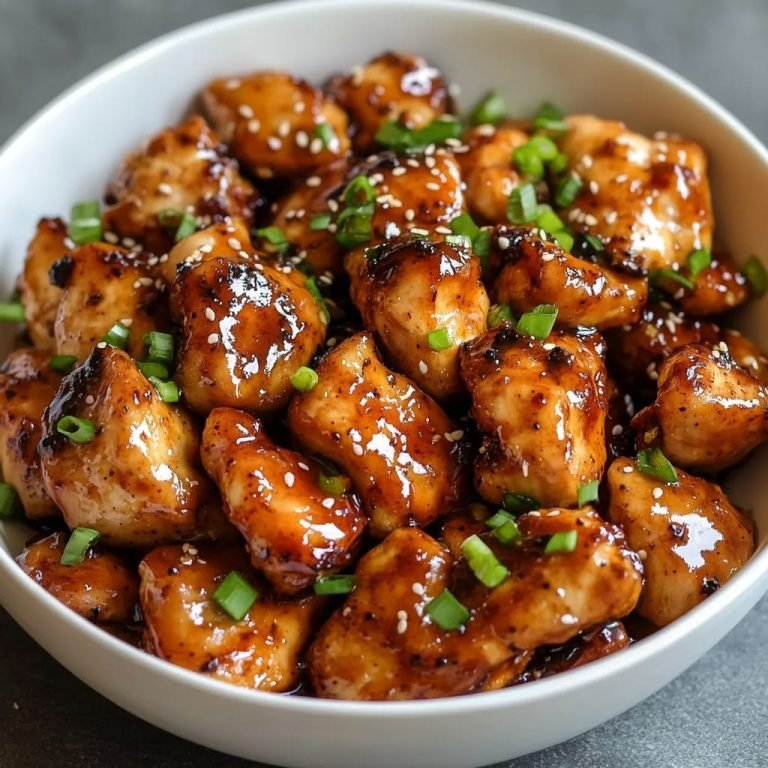
Hot honey chicken is the one recipe my family asks for by name. Crispy fried chicken, buttermilk-brined until it's genuinely juicy, then drizzled with a homemade hot honey that's sweet, spicy, and just tangy enough to cut the richness. It's a different animal from my peri peri chicken wrap, which is marinated and grilled and rolled up. This one gets fried, then sauced at the last possible second. I've made it dozens of times, and it disappears in minutes every single time.
Why you'll love this
- Craggy, crackling crust with juicy meat underneath
- Start to finish in about 40 minutes
- The homemade hot honey takes 3 minutes and beats any bottle
- Pantry ingredients only, nothing you'd have to hunt down
- Beginner-friendly, even if you've never fried chicken before
- Works as tenders, sandwiches, rice bowls, or piled on waffles
Key ingredients & how to use them
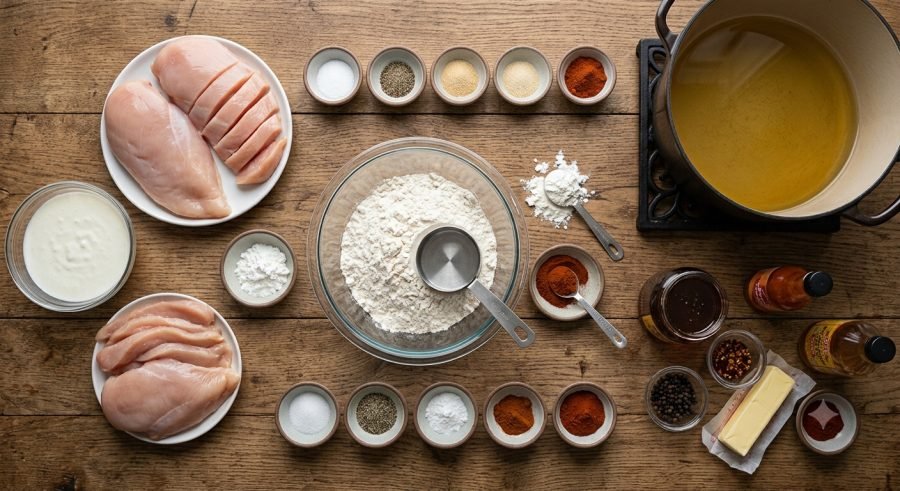
- Boneless skinless chicken breasts — two large ones, about 790g, cut into strips or thin cutlets. Even thickness matters more than shape; thick knots stay raw while the crust darkens past golden.
- Buttermilk — the brine, and the reason this chicken tastes juicy. Its acid and salt help the meat hold onto water through frying, and it doubles as the glue that grabs the flour.
- Flour, cornstarch, and baking powder — the crust. Two cups of flour sounds like plenty for four servings, but you need that depth in the bowl to bury and press each piece. Cornstarch keeps the coating brittle rather than bready; baking powder puffs it just enough to fry up craggy.
- Paprika, garlic powder, and onion powder — these season the brine and the flour both. Season only one layer and you end up with bland fried dough wrapped around well-seasoned meat.
- Cayenne and crushed red pepper flakes — cayenne goes in the coating for low background warmth, the flakes go in the honey for sharper heat. Two different burns, layered on purpose.
- Canola or vegetable oil — neutral, high smoke point, about 2 inches deep in a heavy-bottomed pan. A thin film in a light skillet swings temperature wildly and fries greasy chicken.
- Honey — half a cup, the base of the sauce. Warm it gently; honey scorches over high heat and turns thin and faintly bitter. Swap a couple of spoonfuls for maple syrup if you want it deeper.
- Hot sauce, apple cider vinegar, and butter — heat, tang, and gloss. The vinegar stops half a cup of honey from tasting like dessert, so don't skip it, and butter rounds off the sharp edges. Smoked paprika adds a faint barbecue note.
How to make it (step by step)
-
1
Brine the chicken in seasoned buttermilk
Put the chicken in a large bowl with the buttermilk, salt, black pepper, paprika, garlic powder, and onion powder. Turn it with your hands until every piece is coated, then cover and refrigerate at least 30 minutes, up to 2 hours. I've cooked both ends of that window, and the longer soak is worth planning for: the meat comes out of the oil noticeably juicier. Pat the chicken dry first if it was wet from the package, so the marinade clings.
-
2
Mix the crispy coating
Whisk the flour, cornstarch, baking powder, paprika, garlic powder, cayenne, salt, and black pepper together in a wide, shallow bowl. Keep at it for a good 30 seconds; pockets of unmixed cayenne are how one piece comes out blistering and the next one bland. A shallow bowl beats a deep one; you need room to press the chicken flat into the flour.
-
3
Rub buttermilk into the flour for craggy crumbs
Spoon 1 tablespoon of the buttermilk marinade over the flour and rub it in with your fingertips until small, loose crumbs form. This is the restaurant trick. Those clumps fry into the shards and ridges you get at a good chicken shop instead of one smooth, uniform shell. Aim for pea-sized bits, not a paste; if it starts turning to dough, work in another spoonful of dry flour.
-
4
Dredge, press hard, then rest 10 minutes
Lift a piece out of the marinade and let the excess drip off. Lay it in the flour and press firmly, flip, press again, and repeat until the surface looks thick and dry with no wet patches. Keep one hand for the wet chicken and one for the flour, or you'll be wearing batter mittens. Set each piece on a wire rack and leave it 10 minutes. The flour hydrates and grips the meat, and that rest is the biggest reason a crust stays put.
-
5
Heat the oil to 350°F
Pour about 2 inches of oil into a heavy-bottomed pan and bring it to 350°F (175°C). A thermometer earns its keep here, but a pinch of the coating flour should bubble immediately without going dark brown. Too cool and the crust soaks up oil and turns greasy; too hot and the outside burns before the inside cooks. Let the coated chicken sit out for 15 minutes while it heats, so it isn't fridge-cold going in.
-
6
Fry in small batches
Lower in 2 or 3 pieces at a time, laying them away from you. Fry 4 to 5 minutes per side depending on thickness, until the coating is deep golden brown and the thickest part reads 165°F (74°C). Cold chicken pulls the oil temperature down, which is exactly why a crowded pan turns a crisp crust soft and oily. Small batches keep the oil in the 350°F to 375°F (175°C to 190°C) window; let it climb back before the next one.
-
7
Drain on a wire rack, never paper towels
Move the chicken straight from the oil to a clean wire rack set over a sheet pan. Paper towels trap steam against the underside and soften the crust within a minute or two; a rack lets air circulate all the way around. Frying several batches? Slide the rack into a 200°F (95°C) oven to keep everything hot and crisp.
-
8
Simmer the hot honey
While the chicken rests, put the honey, hot sauce, red pepper flakes, butter, apple cider vinegar, and smoked paprika in a small saucepan over low heat. Warm it 2 to 3 minutes, stirring, until the butter melts and the sauce turns smooth and glossy. Don't let it boil: honey scorches quickly, loses its silky texture, and never fully comes back. It's ready when the kitchen smells gently spicy and the sauce pours off the spoon in a steady ribbon.
-
 9
9Drizzle the hot honey right before serving
Plate the chicken first, then drizzle the warm hot honey over it in thin lines. Timing matters more than anything else here: sauce sitting on a fried crust softens it within minutes, so this happens on the way to the table, not while the last batch is frying. Drizzle rather than toss, and set the extra out in a small bowl for dipping. A pinch of flaky sea salt on the hot chicken makes the sweet and the heat both land harder.
Troubleshooting
- The coating slid off in the oil — nearly always because the chicken was fried straight after dredging. Give coated pieces the full 10 minutes on a rack, let excess buttermilk drip off first, and press the flour on rather than dusting it.
- Greasy, heavy chicken — the oil dropped below 350°F (175°C), usually from a crowded pan. Cool oil gets absorbed instead of crisping the surface on contact. Fry two or three pieces at a time and let the temperature recover.
- Soggy crust — you either drained on paper towels or sauced too early. Use a rack every time, and hold the hot honey until the plates are on the table.
- Dark crust, raw inside — oil too hot, pieces too thick, or both. Pull the heat back to 350°F (175°C) and cut the breasts into even strips or thin cutlets so they cook through in 4 to 5 minutes a side.
- Sauce too hot or too sweet — stir another tablespoon of honey, or extra butter, into a sauce that burns too hard. If it tips too sweet, a splash more apple cider vinegar pulls it back. Taste it off the heat.
- Dry chicken — over-fried or under-brined. Pull it at 165°F (74°C) instead of guessing by color, and give the buttermilk closer to 2 hours next time.
Pro tips
- Cut the pieces to a similar size and thickness so a whole batch finishes at the same moment.
- Let the coated chicken sit at room temperature for 15 minutes before frying; fridge-cold meat cooks unevenly.
- Check the oil temperature between every batch. That habit is most of the gap between home-fried and restaurant-crisp.
- Warm the plates. Hot chicken on a cold plate steams itself soft.
- Sprinkle flaky sea salt on while the chicken is hot, before the honey goes anywhere near it.
- Keep some hot honey aside for dipping so the plated pieces stay crunchy.
Variations & substitutions
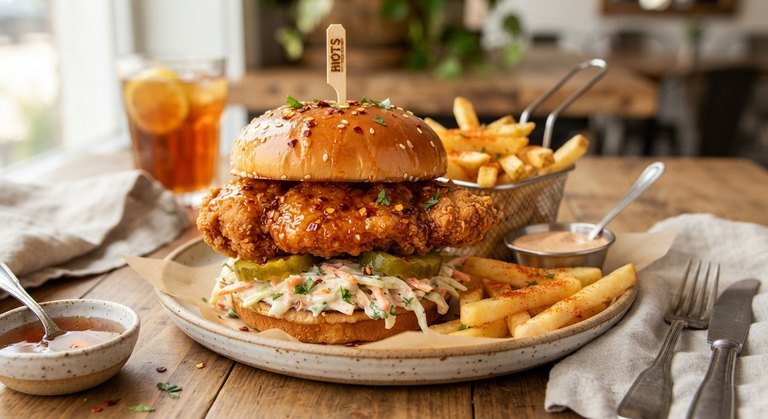
- Hot honey chicken sandwich: pile it on a toasted bun with lettuce, pickles, and garlic mayo. The tangy pickles balance the sweet sauce.
- Tenders: cut the breasts into strips instead of cutlets for a dipping-friendly appetizer or an easy kids' dinner.
- Air fryer: spray the coated chicken lightly with oil and cook at 390°F (200°C) for 18 to 20 minutes, flipping halfway.
- Oven-baked: bake on a rack at 425°F (220°C) for 25 to 30 minutes, until it hits 165°F (74°C). Spray with oil first for color.
- Milder for kids: keep the honey as written and halve the hot sauce and red pepper flakes. Still plenty of flavor, far less burn.
- Gluten-free: a 1-to-1 gluten-free flour blend fries up well in the coating; keep the cornstarch and baking powder exactly as they are.
Storage & reheating
Cool the chicken completely before it goes near a container, or trapped condensation turns the crust to paste. Leftovers keep in an airtight container in the fridge for up to 4 days, with the hot honey in its own jar; sauced chicken goes soft overnight, every time. To freeze, firm the cooled pieces up on a tray, then bag them for up to 2 months, sauce kept separate. Reheat in a 375°F (190°C) oven for 12 to 15 minutes, or an air fryer at the same temperature for 5 to 7 minutes, then warm the honey and drizzle. Skip the microwave; it undoes all that crust in about 40 seconds.
Serving ideas
This is comfort-food chicken, so I lean into comfort-food sides: coleslaw, buttermilk biscuits, garlic butter corn, or a big pan of my best baked mac and cheese when there's a crowd. Twice baked mashed potatoes are the side my family votes for most often. Waffles turn it into brunch, a garden salad keeps it lighter, and leftovers are excellent chopped into rice bowls or wraps. Homemade lemonade or iced lemon tea alongside, and dinner's done.
Recipe
Hot Honey Chicken (Crispy, Sweet & Spicy)
Crispy buttermilk-brined fried chicken finished with a homemade hot honey sauce of honey, hot sauce, butter, and apple cider vinegar. Sweet, spicy, juicy, and ready in about 40 minutes.
Ingredients
- 2 large boneless skinless chicken breasts (about 1 3/4 lb / 790g), cut into strips or thin cutlets
- 1 cup buttermilk
- 1 teaspoon salt
- 1 teaspoon black pepper
- 1 tablespoon paprika
- 1 teaspoon garlic powder
- 1/2 teaspoon onion powder
- 2 cups all-purpose flour
- 2 tablespoons cornstarch
- 1 teaspoon baking powder
- 1 tablespoon paprika
- 1 teaspoon garlic powder
- 1/2 teaspoon cayenne pepper
- 1 teaspoon salt
- 1/2 teaspoon black pepper
- Canola or vegetable oil, enough to fill a heavy-bottomed pan about 2 inches deep
- 1/2 cup honey
- 2 tablespoons hot sauce
- 1/4 teaspoon crushed red pepper flakes
- 1 tablespoon butter
- 1 tablespoon apple cider vinegar
- 1/2 teaspoon smoked paprika
Instructions
- Toss the chicken with the buttermilk, salt, black pepper, paprika, garlic powder, and onion powder in a large bowl until evenly coated. Cover and refrigerate 30 minutes to 2 hours.
- Whisk the flour, cornstarch, baking powder, paprika, garlic powder, cayenne, salt, and black pepper together in a wide, shallow bowl.
- Spoon 1 tablespoon of the buttermilk marinade over the flour and rub it in with your fingertips until small crumbs form throughout.
- Lift each piece of chicken from the marinade, let the excess drip off, then press it firmly into the flour, flipping and pressing several times until thickly coated.
- Set the coated chicken on a wire rack and rest 10 minutes so the crust adheres.
- Fill a heavy-bottomed pan with about 2 inches of oil and heat to 350°F (175°C).
- Fry 2 to 3 pieces at a time for 4 to 5 minutes per side, until deep golden brown and 165°F (74°C) at the thickest part. Let the oil return to temperature between batches.
- Drain the fried chicken on a clean wire rack set over a sheet pan, not on paper towels. Hold batches warm in a 200°F (95°C) oven if needed.
- Warm the honey, hot sauce, red pepper flakes, butter, apple cider vinegar, and smoked paprika in a small saucepan over low heat for 2 to 3 minutes, until the butter melts and the sauce is smooth. Do not let it boil.
- Drizzle the warm hot honey over the chicken in thin lines just before serving, and pass any extra at the table for dipping.
Tips & notes
- Marinate closer to the full 2 hours when you have time; the meat comes out of the oil noticeably juicier.
- Don't skip the 10-minute rest after dredging. It's the main reason the coating stays on in hot oil.
- Drain on a wire rack rather than paper towels so trapped steam can't soften the underside of the crust.
- Hold finished batches on a rack in a 200°F (95°C) oven while you fry the rest.
- Drizzle the hot honey right before serving and serve extra on the side, since sauce sitting on the crust softens it.
Nutrition · per serving (estimate)
Made this recipe?
Tap the stars to leave your rating — it helps other home cooks.
Frequently asked questions
Can I bake hot honey chicken instead of frying it?
Yes. Arrange the coated chicken on a wire rack set over a sheet pan, spray it lightly with cooking oil, and bake at 425°F (220°C) for 25 to 30 minutes, flipping halfway, until it reaches 165°F (74°C) inside. The oil spray is what gets the coating golden. It won't shatter quite like fried chicken, but it's genuinely good.
Can I make the hot honey sauce ahead of time?
Absolutely. It keeps in an airtight jar in the fridge for up to a week. Warm it gently over low heat before serving so it pours in a thin ribbon instead of sitting on the crust in a thick puddle.
How do I know when the chicken is cooked through?
A meat thermometer is the reliable way: 165°F (74°C) at the thickest part. Without one, cut into the thickest piece and look for meat that's evenly white with clear juices, no pink and no cloudy liquid. Strips and thin cutlets usually get there in 4 to 5 minutes per side.
Why did my coating fall off in the oil?
Almost always because the coated chicken went straight into the pan. The flour needs about 10 minutes on a wire rack to hydrate and grip the meat. Letting the excess buttermilk drip off before dredging helps too, as does pressing the flour on firmly rather than lightly dusting it.
How do I keep hot honey chicken crispy?
Drain on a wire rack instead of paper towels, and drizzle the sauce right before it hits the table. Between batches, hold the fried pieces on a rack in a 200°F (95°C) oven. Serving extra hot honey on the side for dipping keeps the plated chicken crunchy longer.
Can I use chicken thighs instead of breasts?
Yes, and they're more forgiving. Boneless skinless thighs carry more fat, so they stay juicy even if you overshoot the timing by a minute. They're usually thicker than cutlets, so give them an extra minute per side and check for 165°F (74°C).
What can I use if I don't have buttermilk?
Greek yogurt thinned with a little milk until it's pourable works well; it's tangy and thick enough to cling. Don't skip the brine altogether, though. The acid and salt help the meat hold water through frying, which is exactly why the chicken stays juicy.
Can I freeze hot honey chicken?
Yes. Cool the fried chicken completely, spread the pieces out to firm up, then move them to an airtight freezer bag or container for up to 2 months. Freeze the hot honey separately. Reheat the chicken in a 375°F (190°C) oven for 12 to 15 minutes, then warm the sauce and drizzle.
Can I make this in an air fryer?
You can. Spray the coated chicken lightly with oil and air fry at 390°F (200°C) for 18 to 20 minutes, flipping halfway. The coating comes out crisp and nicely browned, just not quite as shattering as deep-fried. Add the hot honey after it comes out, never before.
My hot honey came out too spicy. Can I fix it?
Stir in another tablespoon or two of honey, or a small extra pat of butter, which rounds off the burn without thinning the sauce. If it swings too sweet after that, add a splash more apple cider vinegar. Taste as you go, with the pan off the heat.
Leave a review