
Dumpling Lasagna (Easy & Cheesy)
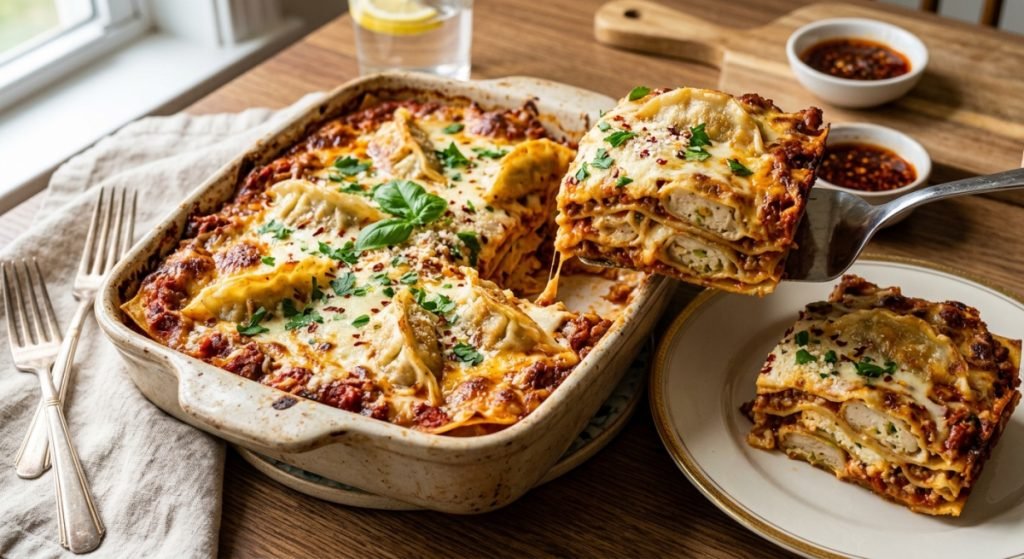
Dumpling lasagna is not a traditional pasta lasagna, and that's the whole point: the dumplings stand in for the noodles. Frozen dumplings go straight into a 9x13 dish with marinara, an egg-bound ricotta filling, and mozzarella, then bake until the edges bubble. No boiling, no noodle sheets. It's a completely different dish from my creamy chicken Alfredo lasagna, which uses white sauce and real pasta, and nothing like the crispy fried lasagna rolls I make for parties. The wrappers steam in the sauce and turn tender, almost like filled pasta.
Why you'll love this
- No noodles to boil and no meat sauce to simmer: about 20 minutes of assembly, then the oven takes over.
- The dumplings go in frozen, so there's nothing to thaw and nothing to plan ahead.
- Three cheeses in every scoop: ricotta, mozzarella, and Parmesan.
- Meat, cheese, or vegetable dumplings all work, so it flexes to whatever's in the freezer.
- It feeds six from one dish and reheats better than most pasta bakes.
- Mild tomato sauce and melted cheese make it an easy sell with kids.
Key ingredients & how to use them
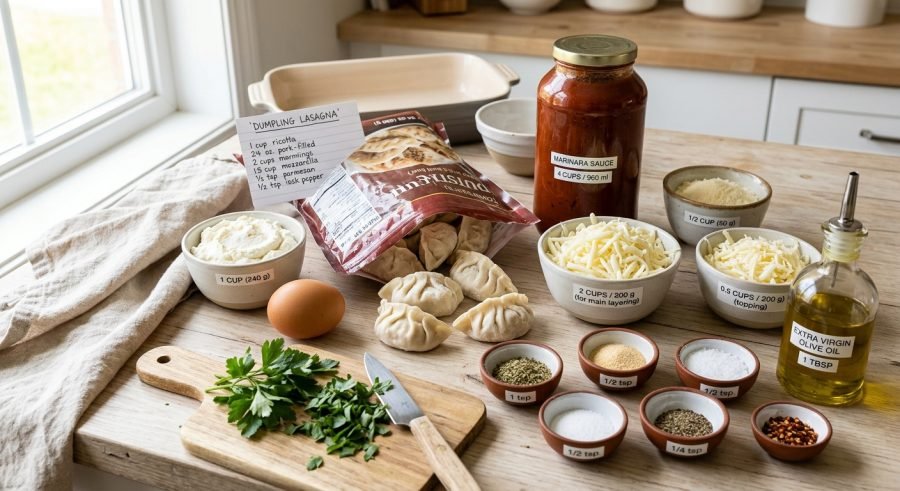
- Frozen dumplings — the noodle replacement, so pick sturdy ones: pork, beef, chicken, or cheese-filled, labeled for boiling, steaming, or pan-frying. Paper-thin delicate wrappers split open in a wet bake. Small dumplings need a few minutes less, jumbo ones a few more.
- Marinara sauce — moisture and most of the flavor. Four cups sounds excessive; it isn't. The wrappers pull water out of the sauce as they steam, and a thin coat leaves you with leathery edges. Buy a chunky jar you'd happily eat cold.
- Ricotta cheese — the creamy middle layer. Whole-milk ricotta stays rich, while part-skim tends to weep. Slight lumps are fine; they bake into soft pockets.
- Egg — binds the ricotta so it sets into a layer instead of sliding out when you scoop. One large egg per cup of ricotta.
- Low-moisture shredded mozzarella — the cheese that stretches and browns. Fresh mozzarella tastes lovely but releases water and gives you a soupy casserole. Half a cup goes into the ricotta, the rest on top.
- Parmesan — salty depth. Grate it yourself if you can, since pre-grated resists melting. Split it: half into the ricotta, half over the top where it crisps.
- Italian seasoning and garlic powder — these season the ricotta, which is bland on its own. Dried beats fresh here because it rehydrates inside the cheese instead of scorching.
- Fresh parsley — chopped into the ricotta for a clean, green note against all that dairy. Dried parsley works too; use half as much.
- Olive oil — greases the dish, then gets drizzled over each serving at the table. That last thread of raw oil is what makes it taste like a restaurant plate.
- Red pepper flakes (optional) — half a teaspoon in the sauce or over the cheese. Tomato and dairy is a mild pairing, and a little heat wakes the whole dish up.
How to make it (step by step)
-
1
Heat the oven and grease the dish
Heat the oven to 375°F (190°C) and rub a 9x13-inch baking dish with the olive oil. Use a deep dish if you have one, at least 2 1/2 inches tall, because four cups of sauce bubble hard in the last ten minutes. Metal pans give crispier edges; glass lets you see whether the bottom sauce is working. Leave the dumplings in the freezer until the dish is greased and the ricotta is mixed.
-
2
Mix the ricotta filling
Stir the ricotta, egg, 1/4 cup Parmesan, 1/2 cup of the mozzarella, parsley, Italian seasoning, garlic powder, salt, and pepper together in a medium bowl. You want it thick and smooth enough to hold a soft ridge when you drag the spoon through it. A few lumps are fine; they bake into creamy pockets. If cold ricotta fights you, let it sit out for five minutes and it spreads much more easily.
-
3
Sauce the bottom of the dish first
Spread about 1 cup of marinara across the bottom, pushing it right into the corners with the back of a spoon. This layer keeps the dumplings from welding to the dish, and it starts steaming the second the pan hits the oven. Bare patches turn into scorched patches, so check the corners before you move on.
-
4
Lay the dumplings in frozen, never boiled
Arrange half the frozen dumplings over the sauce in one layer, flat side down, with a finger's width between them. Don't thaw them and don't boil them first: the sauce steams them through, while pre-boiled wrappers go gummy and gluey in the oven. If they're frozen into a clump, run the block under cool water for a few seconds and they separate cleanly. The gaps fill with sauce as everything settles.
-
5
Spread half the ricotta
Drop spoonfuls of half the ricotta mixture over the dumplings, then spread it roughly with the back of the spoon. It doesn't need to be a neat sheet. Patches taste better in the finished scoop anyway, and a little bare dumpling showing here and there gives the next round of sauce a route down into the layer below. Use a light hand so you don't shove the dumplings out of position.
-
6
Sauce, then build the second layer
Spoon about 1 1/2 cups of marinara over the ricotta, then add the remaining dumplings and the rest of the ricotta mixture. Work the sauce down into the gaps rather than leaving it sitting on the surface. Every wrapper needs contact with something wet. The parts poking up into dry oven air are exactly the parts that turn leathery.
-
7
Finish with sauce, then cheese
Pour the last of the marinara over the top and spread it until no wrapper shows through. Only then scatter on the remaining 1 1/2 cups of mozzarella and 1/4 cup of Parmesan, plus red pepper flakes if you want heat. The order matters: cheese laid straight onto exposed dumplings bakes into a dry crust with hard edges hiding underneath. Aim for even coverage rather than a thick blanket, or the top goes greasy before the middle is hot.
-
8
Cover the dumpling lasagna and bake 25 minutes
Cover the dish with foil, sealing it around the rim, and bake at 375°F (190°C) for 25 minutes. That trapped steam is what actually cooks dumplings from frozen, so a loose tent won't do the job. Using thawed or fresh refrigerated dumplings instead? Start checking at 15 minutes, since those only need to heat through rather than cook from solid. Make the salad while you wait.
-
9
Uncover, finish, and brown the top
Pull off the foil and bake another 8 to 10 minutes, until the cheese has fully melted and the sauce bubbles slowly at the edges. Don't judge by color alone. A fork should slide into a middle dumpling with no resistance, and a thermometer should read at least 165°F (74°C) in the center. For a golden top, broil for 1 to 2 minutes and stand right at the oven door; cheese goes from bronzed to burnt in under a minute.
-
 10
10Rest 8 to 10 minutes, then scoop
Let the dish sit on a rack for 8 to 10 minutes before serving. This is the step everyone skips and then regrets. The sauce thickens, the cheese sets just enough to hold a portion together, and the dumplings finish drinking up moisture instead of shedding it across the plate. Scoop with a big spoon rather than cutting squares, and finish each plate with Parmesan, torn basil, black pepper, and a thread of olive oil.
Troubleshooting
- Dry or leathery dumpling edges — not enough sauce, or wrappers left poking out above it. Every dumpling should be coated, and the top layer has to be sauce before cheese. If your marinara is very thick, stir in 2 to 3 tablespoons of water before you start layering.
- Watery, soupy bake — usually fresh high-moisture mozzarella, raw vegetables, or a thin sauce. Switch to shredded low-moisture mozzarella, sauté mushrooms or spinach until their liquid cooks off, and let the finished casserole rest so the sauce can thicken.
- Dumplings stuck together in a clump — they were bagged frozen together, or they started to thaw on the counter. Run the frozen block under cool water for a few seconds, pull them apart, pat them dry, and lay them out with small gaps. Don't boil them loose.
- Bland, flat flavor — the marinara is doing most of the seasoning and the ricotta went in plain. Taste the sauce straight from the jar; if it's dull, add garlic, red pepper flakes, or a spoonful of tomato paste. Season the ricotta properly, and finish with Parmesan at the table.
- Cheese browning before the middle is hot — the oven runs hot, or the dish spent too long uncovered. Put the foil back on and keep baking until the center reads 165°F (74°C), then uncover for the last few minutes only. Save the broiler for the very end.
Pro tips
- Buy marinara you'd happily eat straight from the jar. It's most of the flavor in the dish.
- Keep the dumplings in the freezer until the second you layer them, so they don't soften and tear.
- Leave about half an inch of headroom in the dish; four cups of sauce bubble up hard under foil.
- A metal pan crisps the edges best, while glass lets you check that the bottom sauce is bubbling.
- Add fresh basil after baking, never before, so it stays green and fragrant.
Variations & substitutions
- Meat lovers: brown 1/2 pound Italian sausage or ground beef, drain it, and scatter it between the dumpling layers.
- Spinach and mushroom: sauté 1 cup sliced mushrooms and 1 cup baby spinach until the liquid cooks off, then layer them with the dumplings.
- Spicy: stir 1/2 teaspoon red pepper flakes or a spoonful of Calabrian chili paste into the marinara, or use hot Italian sausage.
- Creamy tomato: whisk 1/2 cup heavy cream into the marinara before layering for a rounder, slightly sweeter sauce.
- Extra garlic: add two minced cloves to the sauce, or mash roasted garlic into the ricotta for a mellower, sweeter version.
- No ricotta: blend cottage cheese smooth and swap it in one for one, or beat softened cream cheese with a splash of milk and Parmesan.
Storage & reheating
Cool the dumpling lasagna before it goes in the fridge, then cover the dish with foil or move portions into airtight containers; it keeps for up to 3 days. Reheat covered at 350°F (175°C) for 15 to 20 minutes, spooning a tablespoon of marinara over the top first if the leftovers look dry. For a single serving the microwave is fine: cover loosely, heat 60 to 90 seconds, then continue in 20 to 30 second bursts. To freeze, assemble the casserole unbaked in a freezer-safe dish, wrap in foil and then plastic, and freeze up to 2 months; thaw overnight in the fridge and bake at 375°F (190°C) with an extra 10 to 15 minutes, since it starts out cold.
Serving ideas
Dumpling lasagna is rich, so I serve it with something sharp alongside: a green salad with a lemony vinaigrette, Caesar salad, roasted broccoli, or garlicky green beans. For bread on the table, warm garlic knots are hard to beat, and they mop up the sauce left in the dish. If this dumpling-meets-lasagna idea appeals to you, my crispy fried lasagna rolls go the opposite direction: real pasta, rolled, breaded, and fried crunchy instead of baked soft under sauce.
More recipes to try
More comfort bakes from the same oven: creamy chicken alfredo lasagna and crispy fried lasagna rolls. For something creamy and quick, marry me chicken pasta is a weeknight favourite.
Recipe
Dumpling Lasagna (Easy & Cheesy)
A cozy Italian-American casserole that layers frozen dumplings with marinara, an egg-bound ricotta filling, and plenty of mozzarella, then bakes it all until the edges bubble and the top turns golden.
Ingredients
- 24 oz (680 g) frozen dumplings, pork, beef, chicken, or cheese-filled
- 4 cups (960 ml) marinara sauce
- 1 cup (240 g) whole-milk ricotta cheese
- 2 cups (200 g) shredded low-moisture mozzarella cheese, divided
- 1/2 cup (50 g) grated Parmesan cheese, divided
- 1 large egg
- 2 tablespoons chopped fresh parsley
- 1 teaspoon Italian seasoning
- 1/2 teaspoon garlic powder
- 1/2 teaspoon salt
- 1/4 teaspoon black pepper
- 1 tablespoon olive oil, plus more for serving
- 1/2 teaspoon red pepper flakes (optional)
- 1/2 pound (225 g) cooked Italian sausage or ground beef
- 1 cup sautéed sliced mushrooms
- 1 cup baby spinach
- 1/2 cup diced bell peppers
- 1/4 cup fresh basil leaves
- Extra grated Parmesan cheese, for serving
Instructions
- Heat the oven to 375°F (190°C) and grease a deep 9x13-inch baking dish with the olive oil.
- Stir the ricotta, egg, 1/4 cup of the Parmesan, 1/2 cup of the mozzarella, parsley, Italian seasoning, garlic powder, salt, and pepper together in a medium bowl until smooth and thick.
- Spread about 1 cup of marinara over the bottom of the dish, pushing it into the corners.
- Arrange half the frozen dumplings over the sauce in a single layer, flat side down, with small gaps between them. Do not thaw or boil them first.
- Drop spoonfuls of half the ricotta mixture over the dumplings and spread it roughly with the back of a spoon.
- Spoon about 1 1/2 cups of marinara over the ricotta, working it down into the gaps.
- Add the remaining dumplings, then the rest of the ricotta mixture.
- Pour the last of the marinara over the top and spread it so no dumpling wrapper is exposed.
- Scatter the remaining 1 1/2 cups mozzarella and 1/4 cup Parmesan over the sauce, plus red pepper flakes if using.
- Cover tightly with foil and bake for 25 minutes. If your dumplings are thawed or fresh rather than frozen, start checking at 15 minutes.
- Uncover and bake 8 to 10 minutes more, until the cheese is melted, the sauce bubbles at the edges, and the center reads at least 165°F (74°C). For a golden top, broil 1 to 2 minutes, watching constantly.
- Rest 8 to 10 minutes before scooping. Finish each serving with grated Parmesan, torn basil, black pepper, and a drizzle of olive oil.
Tips & notes
- Four cups of marinara is not a typo. The wrappers absorb liquid as they steam, and under-saucing is the number one cause of dry, leathery dumpling edges.
- Use the dumplings straight from the freezer. Thawed ones tear while you handle them and can slump into the sauce.
- Never pre-boil the dumplings. They steam through in the sauce, and boiling first turns the wrappers gluey in the oven.
- Covered for 25 minutes, uncovered for 8 to 10: the foil traps the steam that cooks them through, and the uncovered stretch melts and browns the cheese.
- Rest the casserole 8 to 10 minutes before serving so the sauce thickens and each portion holds together.
Nutrition · per serving (estimate)
Made this recipe?
Tap the stars to leave your rating — it helps other home cooks.
Frequently asked questions
Do I need to thaw the dumplings first?
No, and I'd rather you didn't. Frozen dumplings hold their shape while you layer them, and the covered bake gives them the steam they need to cook through. Thawed dumplings go soft, tear when you handle them, and can slump into the sauce. If you are working with thawed or fresh refrigerated dumplings, cut the covered bake to about 15 minutes and check the center before you uncover.
Do I have to boil the dumplings before layering?
No. The marinara plus 25 minutes under foil creates all the steam and heat they need. Pre-boiling adds water the recipe doesn't want and leaves the wrappers gummy and gluey by the time the casserole comes out. The one exception is a package that specifically says the dumplings must be boiled first, so give the bag a quick read.
What kind of frozen dumplings work best?
Sturdy ones. Pork, beef, chicken, and cheese-filled dumplings all bake well, and vegetable dumplings make it vegetarian. Look for a bag labeled for boiling, steaming, or pan-frying, since those wrappers are built to survive moisture. Very delicate, paper-thin wrappers can split open and spill their filling into the sauce.
Why are the edges of my dumplings dry and leathery?
They weren't covered in sauce. Any wrapper poking above the sauce line bakes in dry oven air and hardens. Make sure the final layer is sauce and then cheese, never cheese straight onto bare dumplings. If your marinara is very thick, stir in 2 to 3 tablespoons of water before you start layering.
Why is my dumpling lasagna watery?
Usually fresh high-moisture mozzarella, raw vegetables, or a thin sauce. Switch to shredded low-moisture mozzarella, and sauté mushrooms or spinach until their liquid has cooked off before layering. Resting the casserole for 8 to 10 minutes also lets the sauce thicken and settle, which fixes most borderline cases.
How do I know when it's done?
Don't go by the color of the cheese alone. The sauce should bubble around the edges, the cheese should be fully melted, and a fork should slide into a center dumpling without resistance. If you use a thermometer, look for at least 165°F (74°C) in the middle of the dish.
Can I make it without ricotta?
Yes. Blend cottage cheese until smooth and use the same amount, or beat softened cream cheese with a splash of milk and some Parmesan for a richer filling. You can also skip the creamy layer entirely and use extra mozzarella and Parmesan, though the result is less lush.
Can I assemble it ahead of time?
Yes, and it's a smart weeknight move. Layer everything in the dish, cover it, and refrigerate for up to 24 hours. Bake it straight from the fridge and add roughly 10 minutes to the covered stretch, since the dish starts out cold. Check the center temperature before you uncover it.
Can I freeze dumpling lasagna?
Yes. Assemble it unbaked in a freezer-safe dish, cover tightly with foil and then plastic wrap, and freeze for up to 2 months. Thaw overnight in the refrigerator, replace the plastic with fresh foil, and bake at 375°F (190°C), allowing 10 to 15 extra minutes. Cooked portions also freeze well in airtight containers.
Why did the cheese brown before the middle was hot?
Either your oven runs hot or the dish spent too long uncovered. Put the foil back on and keep baking until the center reaches 165°F (74°C), then uncover for the last few minutes only. Save the broiler for the very end, and don't walk away from it, because cheese can burn in under a minute.
Leave a review