
Juicy and Tender Beef Steak
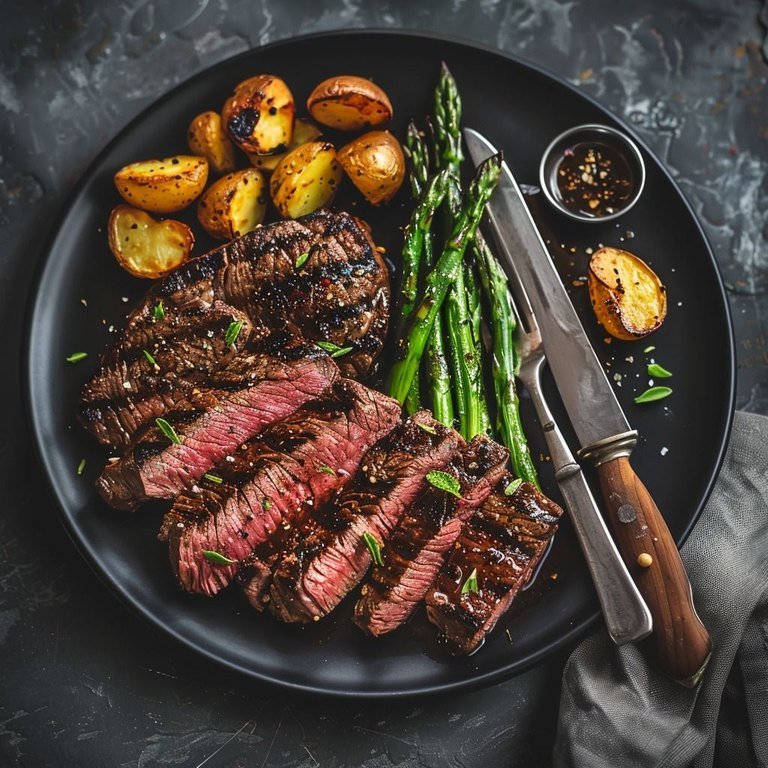
A juicy and tender beef steak is far less about technique you have to learn and far more about four things you have to get right: a decently marbled cut, a bone-dry surface, a pan that is genuinely hot, and knowing the moment to take it off the heat. Do those, finish with butter, crushed garlic and a couple of herb sprigs, and you get a deep brown crust and a pink, tender centre without any special kit. This is a two-steak, one-skillet recipe that takes about twenty minutes and works just as well on a quiet weeknight as it does for a proper dinner, served with twice-baked mashed potatoes alongside.
Why you'll love this
- Juicy and tender by design. A hard sear builds the crust while the inside stays pink and moist.
- Five real ingredients. Salt, pepper, garlic powder, butter and herbs — nothing that masks the beef.
- One pan, start to finish. Sear, baste and rest without touching another dish.
- Steakhouse flavour at home. Garlic butter spooned over the meat gives it that glossy, restaurant finish.
- Beginner-friendly. A thermometer removes all the guesswork about doneness.
- Easy to make your own. Swap the herbs, crust it in pepper, or finish it with mushrooms.
Key ingredients & how to use them
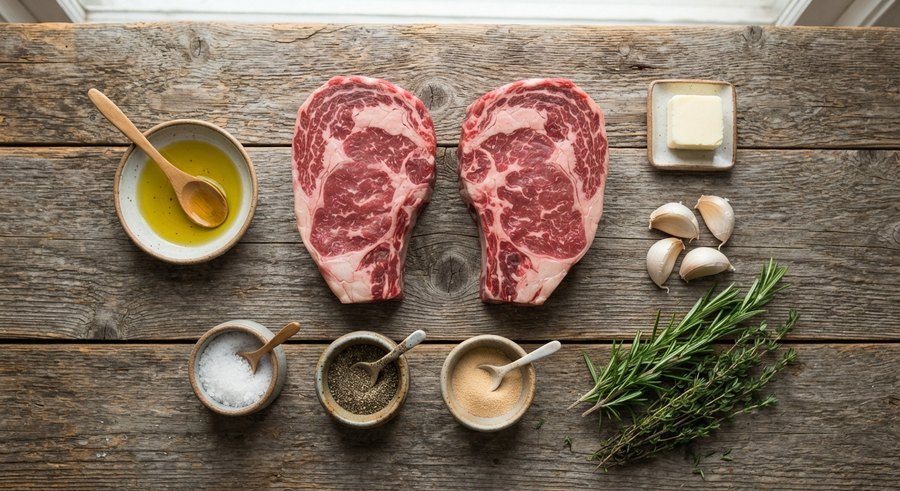
- The steak — 10 to 12 oz (280–340 g) each and 1 to 1 1/2 inches thick. Thickness matters more than most people expect: a thin steak overcooks in the time it takes to build a crust, while a thick one gives you a margin to work with. Ribeye is the richest thanks to its marbling, New York strip is firmer with a strong beefy flavour, and top sirloin is the leaner, cheaper option that still turns out well if you watch the temperature.
- Olive oil — a tablespoon, used for the initial sear only. Any neutral high-heat oil such as avocado or canola works just as well. Butter goes in later; putting it in at the start simply burns it.
- Kosher salt — the coarse flakes sit on the surface and draw out just enough moisture to help browning. Season evenly across the whole surface rather than heaping it in the middle; a good cut does not need to be buried.
- Unsalted butter — two tablespoons added after the sear. It carries the garlic and herb flavour into the meat while you baste, and gives the finished steak its shine. Unsalted lets you control the seasoning.
- Garlic cloves — crushed, not chopped. Whole crushed cloves release their flavour into the butter steadily and can be fished out; chopped garlic scorches in a hot pan within seconds and turns bitter.
- Rosemary and thyme — two sprigs of each, added with the butter so they perfume it rather than burn. Dried herbs work at about 1/2 teaspoon of each, though fresh sprigs give a noticeably more fragrant butter.
- A heavy skillet — cast iron is ideal because it holds its heat when cold meat hits it. A thin pan loses temperature the instant the steak goes in, and you end up with grey meat instead of a crust.
- An instant-read thermometer — not an ingredient, but the one tool that reliably separates a good steak from an overcooked one. Timings vary with thickness and starting temperature; internal temperature does not.
How to make it (step by step)
-
 1
1Temper, dry and season
Take the steaks out of the fridge 20 to 30 minutes before you cook. Sit them on a plate and pat them very dry with paper towels — this is not a fussy detail, because surface moisture has to boil off before browning can even begin, and a wet steak steams itself grey. Season both sides evenly with the salt, black pepper and garlic powder. Resist the urge to bury it; a well-marbled cut already carries plenty of flavour.
-
2
Get the pan properly hot
Set a heavy cast-iron skillet or thick-bottomed frying pan over medium-high to high heat and leave it for 3 to 5 minutes. It needs to be hot before anything goes in. Add the olive oil and swirl it around the base; when it looks shiny and runs easily across the surface, you are ready. A lukewarm pan is the most common reason home steaks come out pale.
-
3
Sear the first side
Lay the steaks into the pan away from you. You should hear an immediate, insistent sizzle — if you do not, the pan was not hot enough. Now leave them completely alone for 3 to 4 minutes. Moving the meat interrupts contact with the pan and stops the crust forming. If a steak sticks hard when you try to lift it, give it another 30 seconds; a properly seared surface releases on its own.
-
4
Sear the second side and add the butter
Flip the steaks and cook the second side for about 3 minutes, until both faces carry a dark golden-brown crust. Now add the butter, the crushed garlic cloves and the rosemary and thyme sprigs to the pan. The butter will foam and turn fragrant almost immediately, and the herbs will start to sizzle at the edges.
-
5
Baste with the garlic butter
Tilt the pan slightly towards you so the melted butter pools at the near edge, and use a spoon to scoop it up and pour it repeatedly over the tops of the steaks for 1 to 2 minutes, flipping them every 30 to 45 seconds. This is what builds the glossy, deeply savoury finish. Watch the butter closely — it should smell nutty and look golden, and if it starts darkening quickly, drop the heat before the garlic turns bitter.
-
6
Check the internal temperature
Slide an instant-read thermometer into the thickest part from the side, avoiding any bone. Rare is 120 to 125°F (49–52°C), medium-rare 130 to 135°F (54–57°C), medium 140 to 145°F (60–63°C), medium-well 150 to 155°F (66–68°C) and well-done 160°F (71°C) and above. Medium-rare to medium keeps a steak at its most tender. Pull it a touch early, because the temperature carries on climbing slightly as it rests.
-
7
Rest before you cut
Move the steaks to a clean plate or board and leave them for 5 to 10 minutes. Do not skip this. Resting lets the juices settle back through the meat instead of running out the moment a knife goes in. If you are slicing rather than serving whole, cut across the grain: shortening those muscle fibres is what makes each bite feel tender. Spoon over any garlic butter left in the pan just before serving.
Troubleshooting
- The steak is grey, with no crust. Either the surface was damp or the pan was not hot enough. Pat the meat completely dry, preheat a heavy skillet for a full 3 to 5 minutes, and wait for the oil to shimmer before the steak goes anywhere near it.
- It is tough even though the timing looked right. Thickness, cut and doneness all pull in different directions here. Leaner cuts with more connective tissue are firmer by nature, and overcooking makes any steak noticeably drier. Choose a well-marbled cut and go by temperature rather than the clock.
- The butter burned and everything tastes bitter. Butter went in too early or the heat stayed too high. Sear in oil first, add butter only once both sides are browned, and lower the burner the moment the butter starts darkening past golden.
- The steaks steamed instead of searing. Too much in the pan at once. Two steaks need room around them; if your skillet is small, cook them one at a time and keep the first warm while the second sears.
- All the juice ran out onto the board. It was cut too soon. Five to ten minutes of resting is the whole fix, and it costs nothing.
- The outside is done but the middle is raw. The steak was thicker than the pan heat could reach in the searing time. Once both sides are crusted, turn the heat down and keep basting until the thermometer reaches your target, rather than pushing the outside further.
Pro tips
- Choose meat with visible marbling — those fat streaks melt during cooking and are where the flavour comes from.
- Pat the steak bone-dry before seasoning; it is the easiest single improvement to browning.
- Heat the pan properly before the steak goes in, not after.
- Never press the steak down with a spatula — it forces juices out and does nothing for the crust.
- Use oil for the sear and butter for the finish, in that order.
- Baste both sides, spooning the butter over rather than leaving it sitting in the pan.
- Rest for at least 5 minutes, and add flaky salt and cracked pepper right at the end.
Variations
- Garlic butter steak. Add an extra tablespoon of butter and a tablespoon of chopped parsley in the final minute.
- Pepper-crusted. Use a full teaspoon of coarsely cracked black pepper per steak, pressed into the meat before searing.
- Spicy. Add 1/2 teaspoon of chilli flakes or 1/4 teaspoon of cayenne to the seasoning and finish with a squeeze of lemon.
- Herb butter. Mash softened butter with parsley, rosemary, thyme and a pinch of salt, and melt a spoonful over the steak while it rests.
- Mushroom steak. Lift the steaks out, then cook sliced mushrooms in the same pan for 4 to 5 minutes until golden and spoon them over.
- Extra savoury. Stir a teaspoon of Worcestershire sauce into the butter during the last minute of basting.
Storage
Cool leftovers and refrigerate them within 2 hours in an airtight container, where they keep for 3 to 4 days. Store the steak whole rather than sliced — less cut surface means less moisture lost. To freeze, cool completely, wrap tightly in plastic wrap or freezer paper, then seal in a freezer bag with as much air pressed out as possible and use within 2 to 3 months, thawing overnight in the fridge. Reheating is where most leftover steak is ruined: warm it in a 250°F (120°C) oven on a rack set over a tray until the centre reaches about 110 to 120°F (43–49°C), which takes roughly 15 to 25 minutes, then sear it in a very hot skillet for 30 to 45 seconds a side to bring the crust back. Sliced steak can also be warmed gently in a little butter over low heat.
Serving ideas
Steak is happiest next to something starchy and something green. Creamy mashed potatoes are the classic, and roast potatoes, chips or a baked potato all work. On the vegetable side, roasted asparagus, green beans, broccoli, sautéed mushrooms or a plain green salad keep the plate from feeling heavy. For a full steakhouse spread, add a basket of garlic knots to mop up the pan butter. If you want something lighter, a tomato and cucumber salad is enough. And any steak that does not get eaten has an obvious second life — sliced thin, it makes a very good sandwich, much like our sliced beef brisket sandwich.
More recipes to try
Round out a steak dinner with twice-baked mashed potatoes and garlic knots, or make it surf and turf with our lobster tail recipe.
Recipe
Juicy and Tender Beef Steak
Two thick beef steaks seared in a hot cast-iron skillet and basted with butter, crushed garlic, rosemary and thyme for a deep crust and a tender, juicy centre.
Ingredients
- 2 beef steaks, about 10–12 oz (280–340 g) each and 1 to 1 1/2 inches thick
- 1 tablespoon olive oil
- 1 teaspoon kosher salt
- 1/2 teaspoon freshly ground black pepper
- 1/2 teaspoon garlic powder
- 2 tablespoons unsalted butter
- 4 garlic cloves, lightly crushed
- 2 sprigs fresh rosemary
- 2 sprigs fresh thyme
Instructions
- Take the steaks out of the refrigerator 20 to 30 minutes before cooking. Pat them very dry with paper towels, then season both sides evenly with the salt, black pepper and garlic powder.
- Place a heavy cast-iron skillet or thick-bottomed frying pan over medium-high to high heat and let it heat for 3 to 5 minutes. Add the olive oil and swirl to coat; it is ready when the oil looks shiny and moves easily across the pan.
- Carefully lay the steaks in the pan. You should hear an immediate strong sizzle. Leave them undisturbed for 3 to 4 minutes, until the underside has a deep brown crust.
- Flip the steaks and sear the second side for about 3 minutes. Add the butter, crushed garlic cloves, rosemary and thyme to the pan.
- Tilt the pan slightly and spoon the melted butter over the steaks repeatedly for 1 to 2 minutes, flipping every 30 to 45 seconds. Lower the heat if the butter starts to darken so the garlic does not burn.
- Check the internal temperature with an instant-read thermometer inserted into the thickest part from the side: 120–125°F (49–52°C) for rare, 130–135°F (54–57°C) for medium-rare, 140–145°F (60–63°C) for medium, 150–155°F (66–68°C) for medium-well, and 160°F (71°C) or above for well-done.
- Transfer the steaks to a clean plate or cutting board and rest for 5 to 10 minutes before serving. Slice against the grain if cutting into strips, and spoon over any garlic butter left in the pan.
Tips & notes
- Pat the steaks completely dry before seasoning — surface moisture prevents a proper crust.
- Preheat a heavy skillet for 3 to 5 minutes; a cold or thin pan gives you grey meat.
- Leave the steak alone during the first sear instead of moving it around.
- Add butter only after both sides are browned, and drop the heat if it darkens quickly.
- Use crushed whole garlic cloves rather than chopped garlic, which burns and turns bitter.
- Go by internal temperature rather than time, and pull the steak slightly early because it keeps cooking as it rests.
- Rest for 5 to 10 minutes before cutting, and slice across the grain.
Nutrition · per serving (estimate)
Made this recipe?
Tap the stars to leave your rating — it helps other home cooks.
Frequently asked questions
What is the best cut for a juicy and tender beef steak?
Ribeye is the easiest cut to get right because its marbling melts during cooking and keeps the meat moist and full-flavoured. New York strip is a little firmer with a strong, beefy taste, and top sirloin is the more affordable option that still turns out tender as long as you do not overcook it. Whichever you pick, look for visible streaks of fat running through the muscle.
How long should I cook a steak in a pan?
For a steak 1 to 1 1/2 inches thick, start with roughly 3 to 4 minutes on the first side, about 3 minutes on the second, then 1 to 2 minutes of butter basting. Those numbers shift with thickness, pan temperature and how you like it cooked, so treat them as a guide and use an instant-read thermometer for the actual decision.
How do I make beef steak tender?
Start with a naturally tender, well-marbled cut, avoid cooking it past medium, and rest it for 5 to 10 minutes before it meets a knife. If you are slicing it, cut across the grain rather than along it — shortening the muscle fibres makes a real difference to how tender each bite feels.
Should I marinate steak before cooking?
A good steak does not need it. Salt, pepper and garlic powder are enough, and a marinade can mask the flavour you paid for. If you are working with a leaner or less tender cut, a marinade can add flavour and may help the texture a little, depending on what is in it and how long you leave it.
Why is my steak tough even though I cooked it correctly?
The cut itself is usually the answer. Some cuts naturally carry more connective tissue and stay firmer no matter how carefully you cook them. Beyond that, overcooking is the biggest culprit — every degree past medium squeezes out more moisture. Choosing a well-marbled cut and pulling it at the right internal temperature solves most cases.
Do I have to bring the steak to room temperature first?
Twenty to thirty minutes out of the fridge helps the steak cook more evenly, because a fridge-cold centre needs more time to come up to temperature and that extra time overcooks the outside. It is not the single most important step — drying the surface matters more — but it is free and it helps.
Can I use dried herbs instead of fresh rosemary and thyme?
Yes. Use about 1/2 teaspoon of each, added with the butter. Fresh sprigs do give the butter a more fragrant, rounded flavour because the oils release slowly as they sizzle, but dried herbs still season the butter perfectly well and are a reasonable everyday substitute.
What kind of pan works best for searing steak?
A heavy cast-iron skillet is ideal. It holds a lot of heat, so the temperature barely drops when cold meat hits it, which is exactly what you need for a crust. Any thick-bottomed frying pan will do the job; a thin, lightweight pan loses heat instantly and tends to steam the steak instead of browning it.
How should I store and reheat leftover steak?
Cool it and refrigerate within 2 hours in an airtight container, keeping it whole rather than sliced, for 3 to 4 days. To reheat without drying it out, warm it in a 250°F (120°C) oven on a rack until the centre reaches about 110–120°F (43–49°C), then sear it in a very hot pan for 30 to 45 seconds per side to bring back the crust.
Can I freeze cooked steak?
Yes. Let it cool completely, wrap it tightly in plastic wrap or freezer paper, then seal it in a freezer bag with as much air removed as you can. Use it within about 2 to 3 months for the best quality and thaw it overnight in the refrigerator before reheating gently.

Leave a review