
Oreo Mug Cake: No Flour, Just Crushed Oreos and Milk
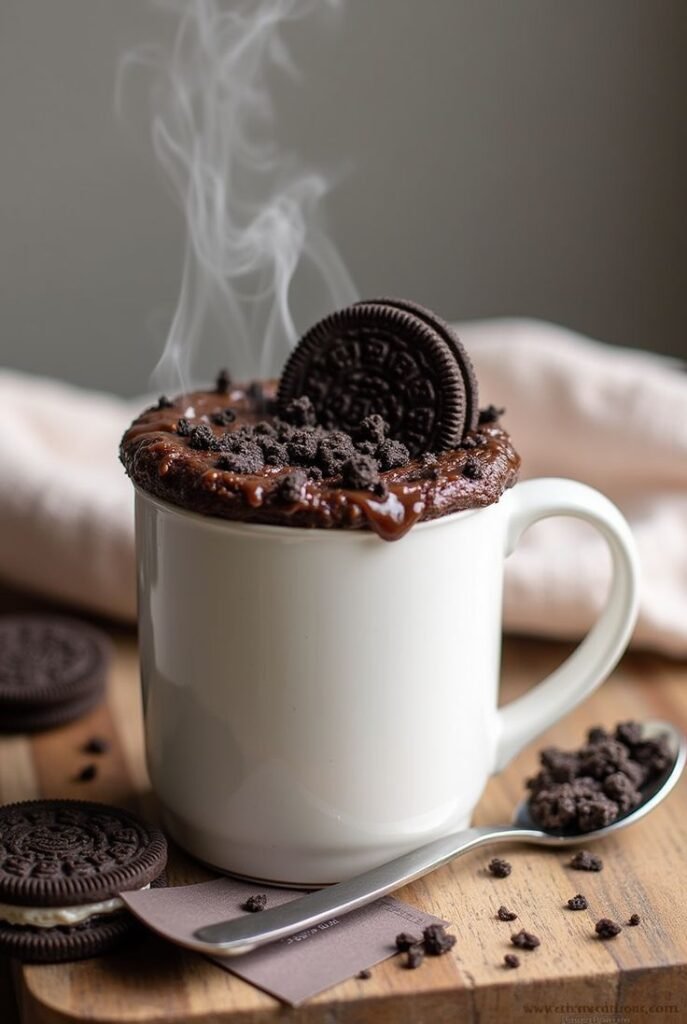
An Oreo mug cake is the only mug cake I make when there's no flour in the house, because the crushed cookies are the entire batter. Six Oreos, a splash of milk and a pinch of baking powder, mixed and microwaved in the same mug, about five minutes start to finish. That's the difference from the flour-based 3-ingredient mug cake, which gives you a plain, neutral crumb, and from a scratch chocolate mug cake, which trades extra measuring for deeper, fudgier chocolate. Here, the cookie does all of it: structure, sugar and the only fat in the mug.
Why you'll love this
- Crushed Oreos are the whole batter: no flour, no egg, no butter, unlike the flour-based 3-ingredient mug cake.
- Five minutes start to finish, and only about a minute of that is cooking.
- One mug to wash, because you crush, mix and cook in it.
- The creme melts in and does butter's job, so the crumb stays soft.
- Easy to steer: skip the sugar and use all the cocoa for a darker, less sweet cake.
Key ingredients & how to use them
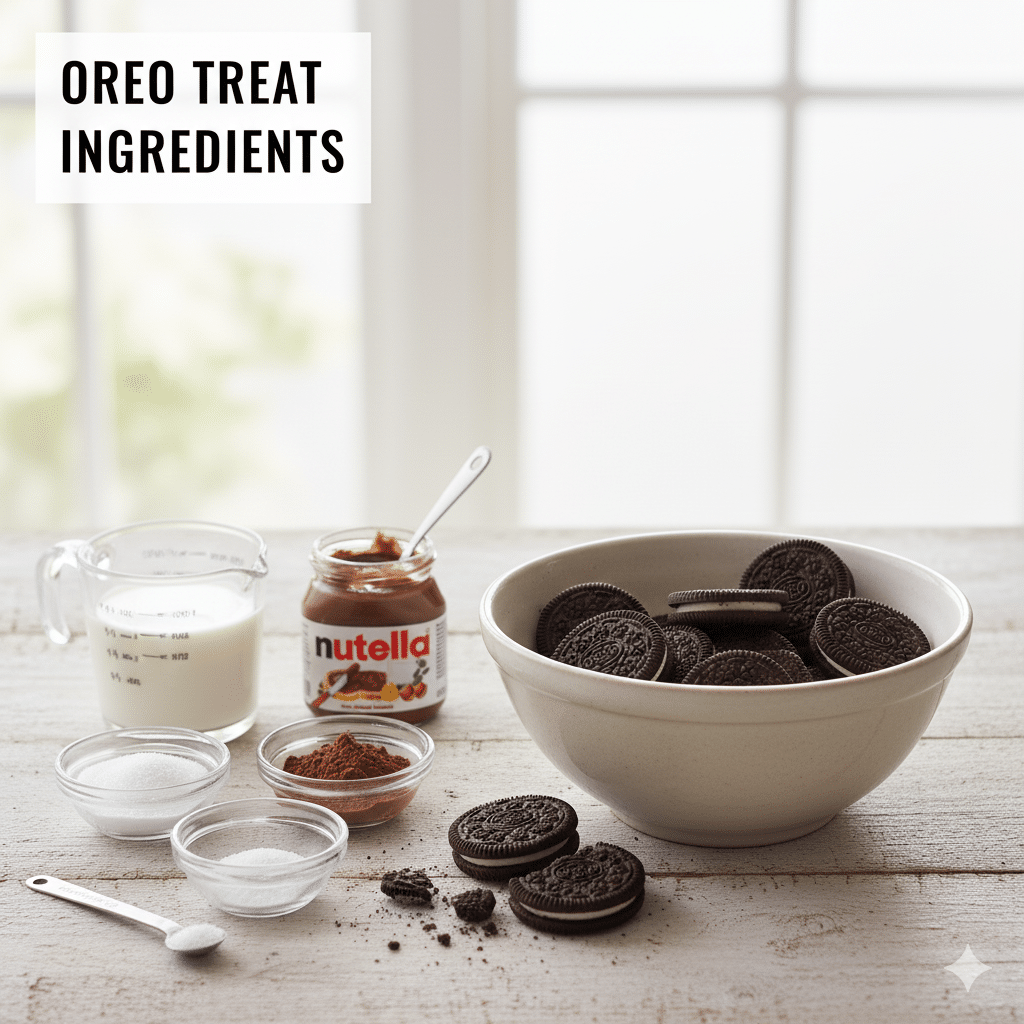
- Oreo cookies (6 whole) — the batter itself: wafer for structure, creme for sweetness and fat. Crush them to damp sand. Pieces bigger than a grain of rice won't hydrate in the minute they get, so they stay gritty.
- The creme filling — leave it in. It's the only fat here, it melts into the batter and it keeps the crumb tender. Smear lumps against the mug wall so they disperse instead of pooling.
- Milk (1/4 cup) — roughly one part milk to two parts crumbs by volume. Whole milk gives the softest crumb. Add it all, stir, then judge: an extra teaspoon is an easy fix, a soupy batter isn't.
- Baking powder (1/4 teaspoon) — the lift that turns soaked cookie mush into cake. Level it flat. A heaped spoonful climbs fast, overflows, collapses and tastes soapy.
- Unsweetened cocoa (1 tablespoon) — darkens the flavor and offsets the creme. It's thirsty, so if the batter tightens after you stir it in, loosen it with milk a teaspoon at a time.
- Sugar (1 teaspoon) — optional, honestly. Six cookies bring plenty. I only add it alongside the full tablespoon of cocoa.
- A 10 to 12 oz mug — not an ingredient, but it decides whether this works. Wide beats tall and narrow, no metallic trim, never more than half full.
How to make it (step by step)
-
 1
1Crush the Oreos
Drop all six cookies into the mug and press them against the wall with the back of a spoon, twisting as you go. Work at it for about 45 seconds, until the crumbs look like damp sand and no shard is bigger than a grain of rice. Scrape the creme streaks off the side and stir them through. Rushing this step is what makes a gritty cake.
-
2
Pour in the milk and let it soak
Add the milk all at once and stir hard for 30 seconds, scraping the bottom curve where dry crumbs hide. The mix goes crumbly, then muddy, then glossy and even in color. If you can still see pale shards, let it sit another 30 seconds; the milk keeps soaking in on its own.
-
3
Stir in the baking powder, cocoa and sugar
Sprinkle the baking powder across the surface rather than dropping it in one spot, then add the cocoa and sugar. Stir about 15 strokes, just until the color is uniform, and stop there. Beat it longer and the cookie starch turns gluey, which cooks up bouncy instead of tender.
-
4
Check the batter and the fill line
Lift the spoon. The batter should fall back in a heavy ribbon within a second or two and close over slowly: thick, but still pourable. If it holds a peak, stir in milk a teaspoon at a time. If it runs like chocolate milk, crush in half another cookie. The mug should be no more than half full.
-
5
Microwave 30 seconds first
Set the mug on the turntable, slightly off center if your machine has a hot middle, and run it for 30 seconds. Not much happens yet: the surface dulls and the edge just begins to set. Treat this first burst as calibration. While it runs, grab a long spoon and let any ice cream soften on the counter.
-
6
Finish in short bursts
Carry on in 15 to 30 second bursts, watching through the door. A 1,100-watt microwave is usually done between 50 and 70 seconds total; a 700-watt one needs closer to a minute and a half. Watch the dome: it climbs, then stops climbing. That's when you check, not before.
-
7
Read the doneness cue
The edge should look set and pull a hair away from the mug, and the top should have lost its wet shine. Press the center with a fingertip: it springs back and feels barely tacky, not slick. A toothpick comes out with moist crumbs clinging on. Clean means you went about ten seconds too far.
-
8
Rest 2 to 3 minutes, then eat from the mug
Pull it while the middle still looks a shade underdone. The hot ceramic keeps cooking it for another two or three minutes, and that carryover is what firms the center. Resting also takes it from mouth-scalding to pleasantly hot. Eat within about ten minutes; it tightens as it cools.
Troubleshooting
- Rubbery and bouncy — ten or twenty seconds too long in the microwave, or a batter that got beaten instead of stirred. Cook in short bursts, stop while the center is tacky, and keep stirring to about 15 strokes.
- Dry and gritty — the cookie pieces were too big to hydrate, or the cocoa drank more milk than expected. Crush finer next time, and loosen the batter with milk a teaspoon at a time.
- Raw, sunken middle — a tall narrow mug, too much batter, or one long blast that set the outside before the center caught up. Use a wide mug filled halfway and cook in 30 then 15 second bursts.
- It overflowed — too small a mug, or a heaped quarter teaspoon of baking powder. Move up to a 10 to 12 oz mug, level the measure, and stand the mug on a plate while you dial in the timing.
- Soapy, metallic aftertaste — too much baking powder, every time. Use a real measuring spoon and level it flat.
- Too sweet — six Oreos carry a lot of sugar before you add any. Leave out the teaspoon of sugar, keep the full tablespoon of unsweetened cocoa, and add a pinch of salt.
Pro tips
- Time how long your microwave takes to bring a cup of cold water to a rolling boil. Under two minutes means a strong machine, so start at 50 seconds.
- Once you find your time, write it on a sticky note inside the cupboard door. Same mug, same time, forever after.
- For a really even crumb, crush the cookies in a zip-top bag with a rolling pin, then tip them into the mug.
- Run the spoon around the bottom corner of the mug before it goes in; dry crumbs hide in that curve and cook into a sandy layer.
- Skip any mug with a gold or silver rim. It'll spark.
Variations & substitutions
- Other flavors: Golden, mint or peanut butter Oreos all behave the same way; leave out the cocoa with Golden ones or the color turns muddy.
- Dairy-free: oat milk is the closest match to whole milk. Almond and rice are thinner, so start with 3 tablespoons and add the rest only if the batter needs it.
- Molten middle: press four chocolate chips or a teaspoon of hazelnut spread into the batter and don't stir them in.
- Cookies-and-cream finish: crumble a seventh Oreo over the top after cooking. Added before, it just softens and vanishes.
- Darker and less sweet: skip the sugar, keep all the cocoa, and stir a pinch of espresso powder into the milk.
Storage & make-ahead
This one's meant to be eaten fresh, within about ten minutes, while the center is still soft. The dry mix is worth making ahead, though: crush a few batches of cookies with the cocoa, sugar and baking powder, and keep it in a sealed jar for up to two weeks. Measure about half a cup per mug, add the milk, and you're cooking a minute later. A cooked cake keeps a day in the fridge under a cover, but it goes firm; splash a teaspoon of milk over it and reheat for 10 seconds. Freezing turns it dense and weepy, so skip that.
Serving ideas
I eat this straight from the mug with a long spoon and no plate involved. A scoop of vanilla ice cream dropped onto the hot center melts down into the cracks; cold milk alongside does a similar job for less effort. If it's tasting rich, a few sliced strawberries or raspberries cut right through it, and lightly whipped cream, unsweetened, works better here than anything sweeter.
More recipes to try
Five minutes is the whole appeal here, and I lean on that hard. If your pantry is even barer, the 3-ingredient mug cake proves how little you actually need, while the paleo mug cake skips grains and dairy altogether. For a bigger version of that same warm, molten chocolate idea, hot fudge chocolate pudding cake feeds a whole table.
Recipe
Oreo Mug Cake - The Quickest Mug Cake Recipe
Ingredients
- 6 Oreo Cookies
- 1/4 cup of milk
- 1/4 teaspoon of baking powder
- 1 teaspoon of sugar
- 1 tablespoon unsweetened cocoa
Instructions
- Crush Oreos
- Use a roomy 10 to 12 oz microwave-safe mug, and plan to fill it no more than halfway so the cake has room to rise.
- Oreos can be crushed with a fork or the back of a spoon right in the mug. Crush them to fine, damp crumbs, since pieces bigger than a grain of rice stay dry and gritty.
- Add Milk
- Pour the milk into the mug and stir until all of the crumbs are soaked, scraping the bottom corner. The batter should be thick but pourable, rich and chocolatey, not watery.
- Add Baking Powder & Extras
- Add the cocoa powder (optional), sugar and baking powder. Stir just until smooth, with no dry pockets, and don't beat it.
- Microwave
- Heat the mug in the microwave for between 1 minute and 1 minute 15 seconds. It's pure magic to watch it rise!
- Start with 50 seconds if your microwave is powerful, then add time in 15-second bursts as needed.
- Check and serve
- When the top is set but the center is still soft, your Oreo mug cake is ready. It should have a warm, chocolatey aroma. Let it rest for 2 to 3 minutes before eating, since it keeps cooking in the hot mug.
Watch how to make it
Nutrition · per serving (estimate)
Made this recipe?
Tap the stars to leave your rating — it helps other home cooks.
Frequently asked questions
Do I need to crush the Oreos finely?
Yes, finer than most people bother with. The milk only gets about a minute to soak in before cooking, so any piece bigger than a grain of rice keeps a dry core and tastes gritty. Aim for crumbs that look like damp sand, with the creme smeared through them.
Why is my mug cake rubbery or dense?
Overcooking and overmixing, in that order. Ten extra seconds in the microwave is enough to turn the center bouncy, so cook in short bursts and stop while it's still slightly tacky. Stir the batter about 15 strokes, just until the color is even.
How long should I microwave an Oreo mug cake?
Between 1 minute and 1 minute 15 seconds on an average machine. A 1,100-watt microwave often finishes at 50 to 70 seconds, while a 700-watt one can need a minute and a half. Run 30 seconds first, then add 15-second bursts, and write down the time that worked.
Can I make an Oreo mug cake without baking powder?
You can, but it stays dense and pudding-like instead of rising into a cake. The baking powder is what lifts soaked cookie crumbs into something with a proper crumb. If you're out, expect a fudgy, brownie-ish result and cook it a few seconds less.
What kind of milk works best?
Whole milk gives the softest, richest crumb because the extra fat shortens it. Low-fat milk works fine and bakes up a little lighter. Of the plant milks, oat is closest to whole milk; almond and rice are thinner, so start with 3 tablespoons and add more only if the batter needs it.
Why did my mug cake overflow?
The mug was too small, or the baking powder was heaped instead of level. Use a 10 to 12 oz mug and fill it no more than halfway, since the batter roughly doubles at its peak. Standing the mug on a small plate saves the cleanup while you're dialing in the timing.
Can I double the recipe?
Not in one mug. A double batch cooks unevenly, setting at the edges while the middle stays raw. Mix and microwave each serving in its own roomy mug, one after the other; the second takes about the same time as the first.
Can I use Double Stuf Oreos, or should I scrape the creme out?
Leave the creme in. It's the only fat in the recipe, and it melts into the batter and keeps the crumb tender. Double Stuf works but makes a sweeter, softer cake, so use five cookies instead of six and skip the added sugar.
Can I make it ahead or freeze it?
The cake itself has about a ten-minute window and is best eaten warm from the mug. What you can prep is the dry mix: crush a few batches of cookies with the cocoa, sugar and baking powder, jar it for up to two weeks, then measure about half a cup per mug. Don't freeze the cooked cake, as it thaws dense and weepy.
Can I bake it in the oven instead of the microwave?
Yes. Tip the batter into a small ramekin and bake at 350°F (175°C) for about 12 to 15 minutes, until the edge is set and the center springs back. It comes out drier and more brownie-like than the microwave version. Start checking at 10 minutes, since ramekin sizes vary.
Leave a review